
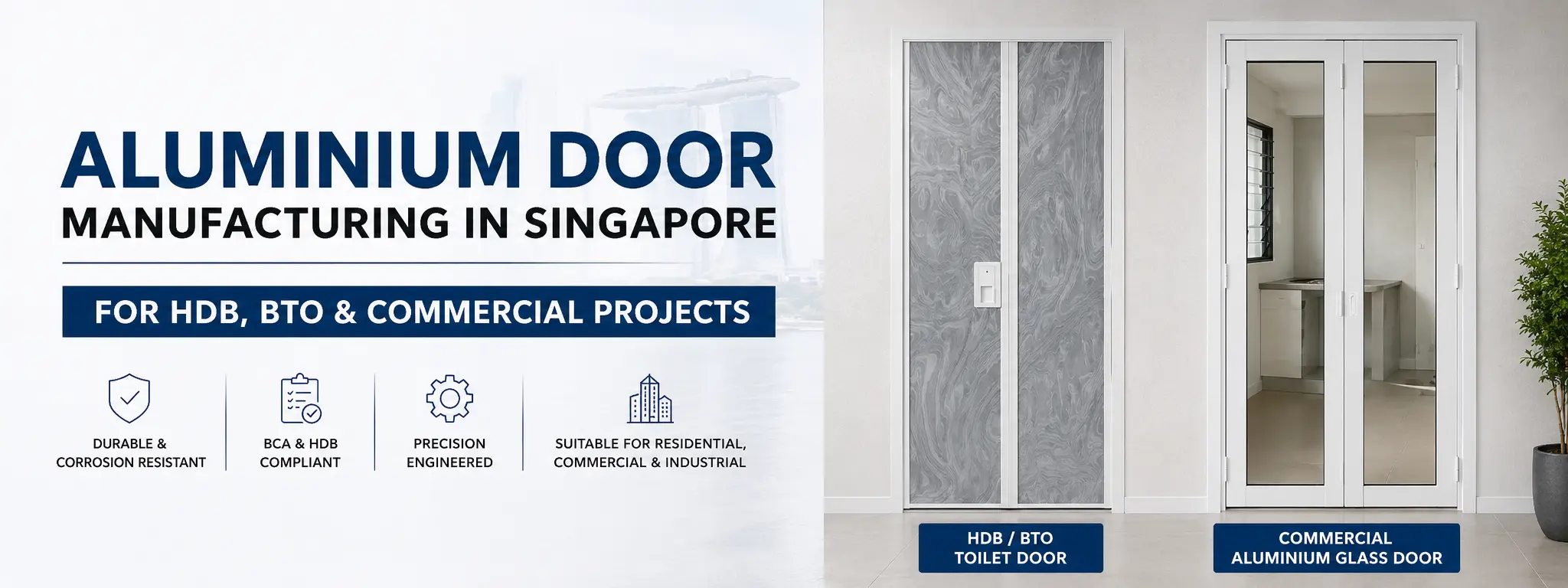
Aluminium Door Manufacturing in Singapore: A Complete Guide for HDB, BTO & Commercial Projects
From toilet door replacements in HDB flats to fire-rated door sets in commercial towers — this guide covers everything architects, contractors, interior designers, and renovation professionals need to know about specifying and sourcing aluminium doors in Singapore.
Aluminium has become the dominant door material across Singapore's residential and commercial construction landscape — and for good reason. The material's combination of corrosion resistance, design flexibility, and compliance with local building codes makes it the preferred choice for builders, interior designers, and facilities managers working across every property segment.
Whether you're a main contractor specifying doors for a new BTO block, an interior designer sourcing toilet doors for an HDB renovation, or a facilities manager replacing doors in an ageing commercial building, understanding the technical and regulatory landscape is essential for project success.
Why Aluminium Doors Dominate Singapore's Property Market in 2026
When project teams evaluate door materials for Singapore's unique climate and regulatory environment, aluminium consistently outperforms timber, PVC, and mild steel across three critical dimensions: lifecycle cost, maintenance burden, and compliance with HDB and BCA requirements.
Singapore's average relative humidity sits at around 84%, and frequent rain cycles accelerate the deterioration of untreated timber and increase rust formation on uncoated steel. Aluminium's natural oxide layer provides intrinsic corrosion resistance — no additional annual treatments required.
Key Reasons Aluminium is Specified Across Singapore Property Types
- Corrosion resistance: Aluminium naturally forms a protective oxide layer, making it highly suitable for wet areas including bathrooms, external corridors, and coastal properties.
- Low maintenance: Unlike timber, aluminium does not warp, rot, or require periodic repainting. Annual cleaning with mild detergent is typically sufficient.
- Lightweight and strong: Aluminium's strength-to-weight ratio allows for large door panels without the structural weight of steel, simplifying installation and reducing load on hinges.
- Design flexibility: Available in a wide range of powder-coat colours, anodised finishes, and frame profiles — from slim modern designs to traditional louver configurations.
- Compliance-ready: Aluminium doors can be manufactured to HDB, BCA, and SCDF fire-rating requirements, making them viable across all Singapore property categories.
- Sustainability: Aluminium is 100% recyclable, aligning with Singapore's Green Building Masterplan and BCA Green Mark requirements for commercial projects.
Powder-coated aluminium frames in wet-area applications (bathrooms, external corridors, facades) achieve a maintenance-free service life of 15–25 years under Singapore's tropical conditions — approximately three times longer than timber installed under equivalent conditions, according to BCA building material guidelines.
For B2B buyers managing multi-unit projects — whether 300 HDB bathrooms or a commercial tower fit-out — that lifecycle advantage translates directly to fewer contractor callbacks, reduced maintenance burden, and improved long-term asset performance.
Certifications & Compliance: What to Verify Before Appointing a Contractor
For procurement officers, project managers, and main contractors in Singapore, appointing a certified aluminium door contractor is not simply best practice — it directly protects your project from site rejection, warranty disputes, and compliance penalties under local regulations.
Essential Certifications to Request
Always request a supplier's BCA license number and bizSAFE certificate before awarding a door installation contract. Using uncertified contractors may create liability exposure for main contractors under the Workplace Safety and Health Act (WSHA). Request documentary evidence — legitimate contractors provide this readily.
For Commercial & Government Projects
Projects involving government buildings, hospitals, schools, or JTC industrial estates typically require a more comprehensive compliance documentation package. Contractors should be able to provide product datasheets, material warranty certificates, method statements, and a list of comparable completed projects on short notice — usually within 24 to 48 hours of request for tender submissions.
Aluminium Door Applications by Property Type in Singapore
Different property categories in Singapore carry distinct requirements around permitted door configurations, fire ratings, acoustic performance, and regulatory compliance. Understanding these differences at the specification stage prevents costly redesigns during construction or TOP inspection.
HDB Flats
- HDB-compliant fixing methods and approved dimensions
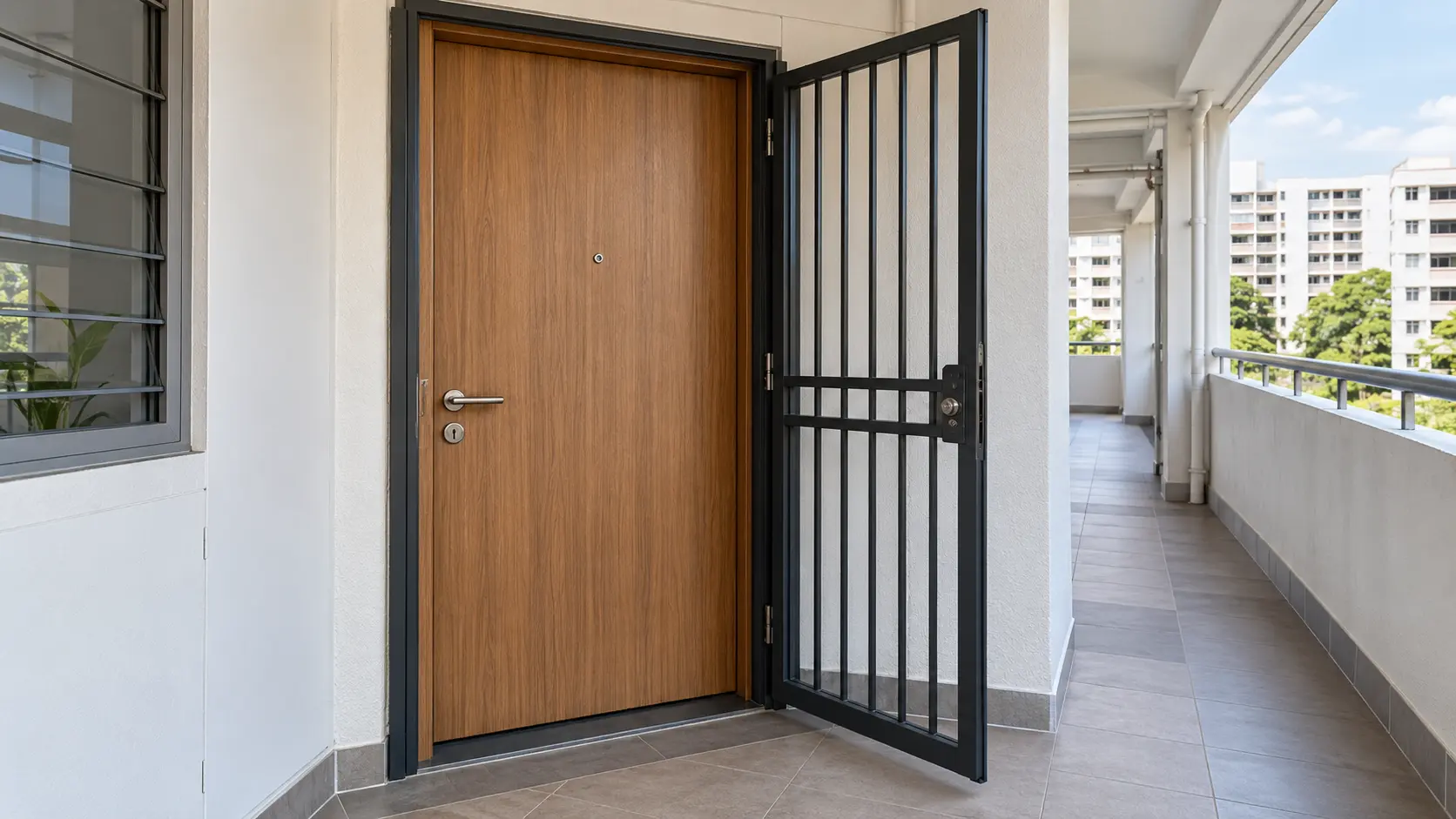
- Toilet, bedroom and main door configurations available
- Slim profile frames ideal for smaller flat layouts
- Wide colour range compatible with HDB interior finishes
- Suitable for resale (post-MOP) renovation projects
- Works with HDB-experienced renovation contractors and ID firms
BTO Flats
- Bulk supply capability aligned with TOP handover milestones
- Works with main contractors, developers, and ID project teams
- Pre-TOP installation coordination and scheduling available
- Meets standard HDB finishing and handover requirements
- Progressive delivery management for large multi-block orders
- Full project documentation for HDB submission included
Condominiums & Landed
- Premium anodised and powder-coat finishes for design-led projects
- Custom sizing for large bathrooms and master suites
- Frameless and slim-frame aesthetic options
- Acoustic glass infill configurations available
- Coordinates with architects and interior design firms
- Compatible with premium hardware brands (Hafele, Dorma)
Offices & Retail
- Heavy-duty commercial-grade aluminium extrusion profiles
- Frameless glass doors for reception areas and meeting rooms
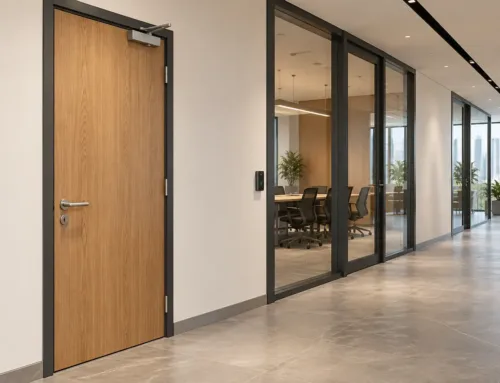
- Toilet core doors for office washroom banks
- BCA and FSSD-compliant fire-rated options for stairwells
- Bulk supply capability for fit-out contractors
- ADA-compliant wide-swing configurations
Hotels, Hospitals & Clinics
- Anti-bacterial powder coating finishes for healthcare environments
- Flush concealed-hinge designs for patient room aesthetics
- High-traffic heavy-duty frame specifications
- Fire-rated door sets for FSSD compliance in corridors
- Phased handover project management available
- Compatible with access control and smart lock integration
Factories & Warehouses
- Heavy industrial-grade extrusion profiles for high-use openings
- Corrosion-resistant configurations for chemical environments
- Louvred ventilation doors suitable for server rooms
- Wide-span openings for equipment and loading access
- JTC industrial estate project experience
- Impact-resistant glazing options for safety-critical areas
Aluminium Door Types: The Contractor's Technical Guide
Selecting the wrong door configuration at the specification stage is one of the most common — and avoidable — causes of project delays and post-handover defect claims. This section helps procurement teams and renovation professionals specify the correct door type from the outset.
Swing Doors
The most common residential configuration in Singapore. Available in single or double-leaf, with inward or outward swing to accommodate layout constraints. Standard for HDB toilet, bedroom, and utility room applications.
Sliding Doors
A space-saving solution well-suited to smaller HDB bathrooms and tight corridor spaces. Available in single or bi-parting configurations with soft-close track systems. Popular for shower enclosures and utility areas.
Bi-Fold Doors
Versatile folding door panels for openings requiring maximum clear access width. Commonly specified for utility rooms, drying yards, and commercial partitioning where full-width passage is required.
Fire-Rated Doors
SCDF-compliant FD30 and FD60 rated aluminium door sets for stairwells, plant rooms, electrical risers, and designated escape routes. Mandatory in many commercial and industrial building configurations.
Frameless Glass Doors
Full-height frameless or slim-frame glass door configurations for modern commercial lobbies, office reception areas, meeting rooms, and premium residential interiors. Available with tempered or laminated safety glass.
Louvre / Ventilation Doors
Doors with horizontal louvre slats that allow passive airflow without compromising security. Used extensively in server rooms, electrical risers, store rooms, and utility areas where ventilation is a functional requirement.
Materials, Profiles & Finishes: What Specifiers Need to Know
The performance of an aluminium door installation depends on the underlying material grade, profile design, and surface finish. Understanding these distinctions helps project teams avoid under-specifying for demanding environments and over-specifying for standard applications.
Aluminium Alloy Grades
Most architectural aluminium door frames in Singapore use 6063 or 6061 series aluminium alloy extrusions. The 6063 alloy offers excellent extrudability and surface finish quality, making it the standard choice for interior and semi-exposed applications. The 6061 alloy provides higher structural strength and is preferred for heavy-duty commercial and industrial door frames.
Surface Finish Options
- Powder Coating: The most widely used finish for Singapore applications. Thermally bonded polymer coating available in a wide range of colours. Provides excellent UV and corrosion resistance with a typical service life of 15+ years. Suitable for all property types.
- Anodising: An electrochemical process that thickens the natural oxide layer on the aluminium surface. Produces a harder, more abrasion-resistant surface than powder coating. Commonly specified for high-traffic commercial applications and design-conscious projects where a metallic aesthetic is preferred.
- Wood Grain (Thermal Transfer): A decorative finish that applies a photorealistic timber pattern onto powder-coated aluminium. Popular for HDB and condo renovation projects where a warm aesthetic is desired without the maintenance requirements of real timber.
- Mill Finish: The natural, uncoated aluminium surface. Used in limited industrial applications where aesthetic is not a priority and the profile will not be exposed to external weathering.
Frame Profile Systems
Aluminium door profiles are available in a range of configurations to suit different installation contexts:
- Standard profiles (45–65mm face width) are used for most residential applications including HDB and BTO doors.
- Slim-line profiles (25–38mm face width) are preferred for modern aesthetics in condo and high-end residential projects where the frame-to-glass ratio is a design consideration.
- Heavy-duty commercial profiles (65–100mm face width) are specified for high-traffic doors in offices, retail, and industrial facilities where frame rigidity and durability under repeated use is critical.
For HDB renovation works, always confirm that the selected aluminium door profile and fixing method comply with HDB guidelines. Non-compliant fixing methods — particularly those that damage structural concrete or interfere with waterproofing membranes — are a common cause of inspection failure during BTO renovation works.
Aluminium vs Other Door Materials: Singapore Context
Project teams frequently evaluate aluminium against timber, uPVC, and steel. The table below summarises performance across criteria relevant to Singapore's climate and regulatory environment.
| Criterion | Aluminium | Timber | uPVC | Steel |
|---|---|---|---|---|
| Corrosion Resistance (Tropical) | ✓ Excellent | ✗ Poor — warps in humidity | ✓ Good | ✗ Poor — rust-prone |
| Maintenance Frequency | ✓ Low | ✗ High — repainting needed | ✓ Low | △ Moderate — rust treatment |
| Fire Rating Available | ✓ FD30, FD60 | △ Treated timber only | ✗ Not standard | ✓ Available |
| HDB / BCA Compliance | ✓ Fully compliant | △ Case by case | △ Limited types | △ Specific uses only |
| Customisation Range | ✓ High — colours, profiles, glass | ✓ High — but higher cost | △ Moderate | △ Moderate |
| Weight & Installation | ✓ Lightweight | ✗ Heavy | ✓ Light | ✗ Heavy |
| Recyclability | ✓ 100% recyclable | △ Partly | ✗ Poor | △ Partly |
| Long-Term Cost (15yr) | ✓ Lowest overall | ✗ Highest — frequent upkeep | △ Medium | △ Medium-High |
* Performance ratings reflect Singapore tropical conditions based on industry standards and field data from residential and commercial installations.
Maintenance & Lifespan: Aluminium Doors in Singapore's Tropical Climate
One of aluminium's most significant advantages for Singapore property owners and facilities managers is its minimal maintenance requirement relative to alternative materials. However, some basic care practices extend service life and prevent avoidable deterioration.
Routine Cleaning
Aluminium door frames and panels should be cleaned every three to six months using a mild non-abrasive detergent solution and a soft cloth or sponge. This removes dust, salt deposits (particularly relevant for coastal and high-rise properties), and biological growth that can gradually stain powder-coated surfaces.
Avoid using wire brushes, abrasive pads, or solvent-based cleaners (acetone, paint thinner) on aluminium surfaces, as these damage the protective powder-coat or anodised finish.
Hardware Maintenance
- Hinges: Lubricate with a silicone-based lubricant annually. Avoid petroleum-based oils, which attract dust and gum up hinge mechanisms over time.
- Sliding tracks: Clear debris from track channels every three months and apply a dry PTFE-based lubricant to maintain smooth operation. Wet lubricants trap grit and accelerate track wear.
- Door closers: Inspect hydraulic door closers annually for oil leaks and adjust closing speed if required. Replace units showing persistent leaking.
- Locks and latches: Lubricate lock cylinders with graphite powder annually. Avoid oiling lock cylinders with wet lubricants.
Inspecting Powder-Coated Surfaces
Powder-coated aluminium surfaces should be inspected annually for scratches, chips, or areas where the coating has worn through to bare metal. Exposed aluminium in coastal environments is susceptible to pitting corrosion. Small damage areas can be touched up with matching aluminium paint; larger areas may warrant recoating by a specialist.
Powder-coated aluminium frames in standard residential and commercial environments typically achieve 15 to 25 years without major maintenance. Anodised aluminium in sheltered applications can exceed 30 years. By comparison, timber doors in Singapore's wet areas typically require replacement or significant refurbishment within 5 to 8 years.
Installation Considerations for Singapore Aluminium Door Projects
Proper installation is as important as material quality. Poorly installed aluminium doors — regardless of frame grade — will exhibit misalignment, water ingress, and premature hardware failure. This section covers key considerations for project teams and renovation contractors.
HDB and BTO Installation Requirements
HDB has specific guidelines governing how doors may be installed in public housing flats. Key requirements include:
- Approved fixing methods that do not damage structural concrete elements or waterproofing membranes.
- Door frame dimensions must comply with HDB's approved opening sizes — non-standard sizes require written approval.
- Works must be carried out by a contractor registered on HDB's List of Licensed Renovation Contractors (LRC).
- Wet works (hacking, concrete patching) require additional permits under HDB's renovation permit framework.
Commercial Project Installation Considerations
For commercial projects, the door installation process typically involves greater coordination between trades:
- Structural opening accuracy: Structural openings should be within ±5mm of specified dimensions to allow proper frame installation without packing or shimming. Significant deviations add time and cost.
- Fire-rated door sets: Installation of fire-rated doors must follow the manufacturer's certified installation method precisely. Any deviation from the certified installation procedure can void the fire rating.
- Access control integration: Door frames for access-controlled openings should be pre-wired with conduit prior to installation. Retrospective wiring through installed frames is time-consuming and may compromise frame integrity.
- Progressive installation scheduling: For large-scale projects, align delivery and installation schedules with construction milestones to avoid damage to installed doors during subsequent construction activities.
The Manufacturing and Installation Process
Project brief is reviewed including property type, door schedule, opening dimensions, and any specific compliance requirements. For commercial projects, floor plans and door schedules should be shared at this stage.
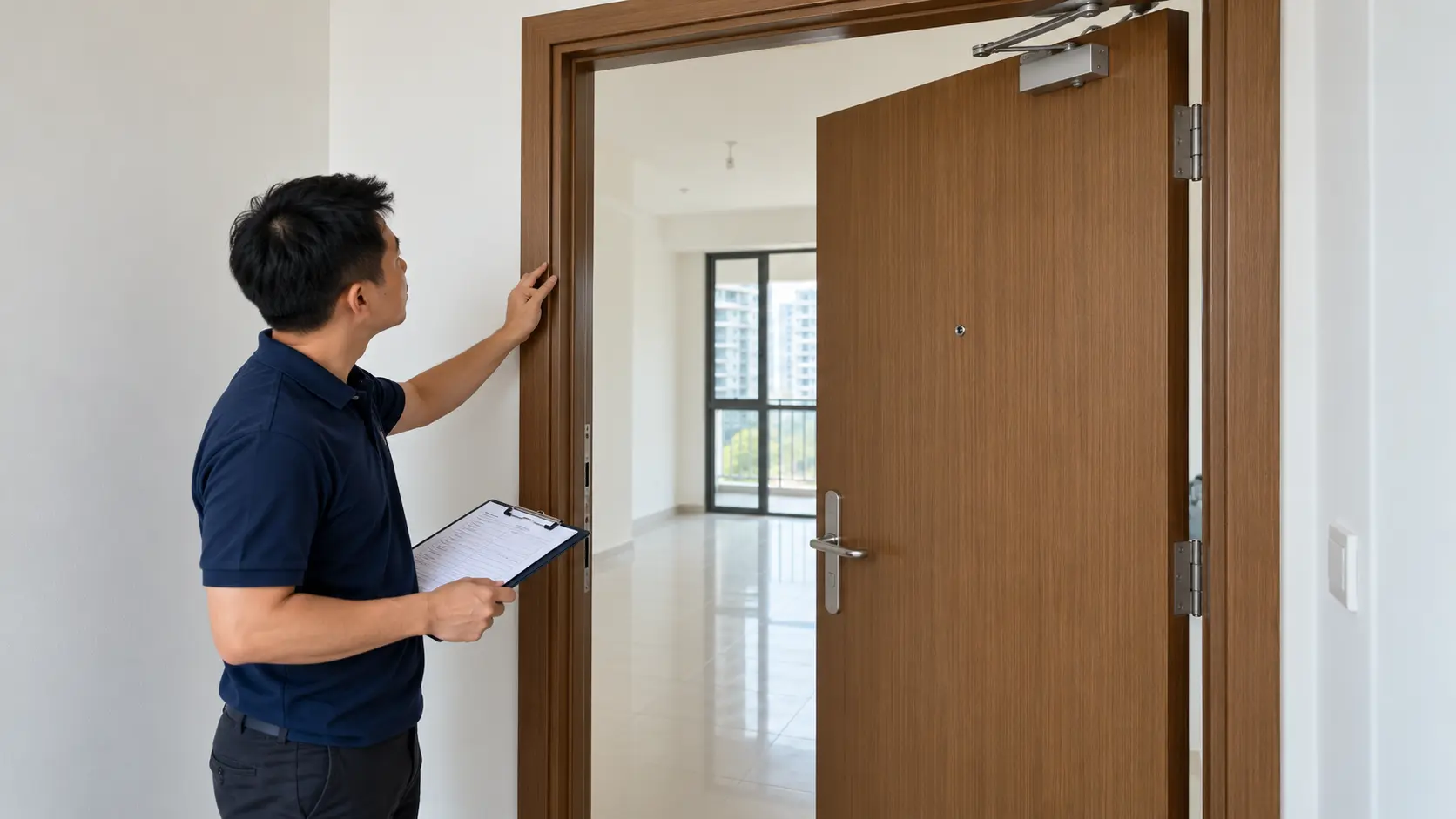
On-site measurement verifies actual opening dimensions, structural conditions, and any installation constraints. For multi-unit projects, this is coordinated with the site supervisor or project manager.
A detailed project proposal is prepared covering product specifications, finish options, hardware selection, fabrication lead times, and installation schedule. Full tender documentation is available for B2B clients.
Doors are precision-fabricated using certified aluminium extrusions. Each unit undergoes dimensional accuracy, surface finish, and hardware function checks prior to dispatch. Inspection reports are available on request.
Installation is carried out by certified in-house installation teams. Final alignment, hardware adjustment, and site clearance are completed before handover. Post-installation defect rectification is covered under the 12-month workmanship warranty.
B2B Procurement Guide: Bulk Supply & Tender Projects
Large-scale door procurement — whether for a 500-unit BTO block, a commercial tower fit-out, or an estate upgrading programme — involves operational considerations that differ significantly from individual residential orders. This section is written for main contractors, project managers, and procurement teams.
Tender & Bulk Order Capabilities to Evaluate
- Minimum Order Thresholds: Established manufacturers typically have no minimum order for standard products. For large-scale orders (100+ units), dedicated account management and preferential scheduling should be available.
- Lead Time Planning: Standard products: 5–10 working days. Custom fabrication: 15–21 working days. Phased delivery schedules should be negotiated for progressive construction milestones.
- Compliance Documentation: A competent supplier should be able to provide product datasheets, BCA license, bizSAFE certificate, method statements, and material warranties within 24 hours for tender submissions.
- Site Survey Capability: For commercial projects, the supplier should conduct complimentary on-site measurement and coordinate with QS or ID teams. Avoid suppliers who quote from drawings alone for complex installations.
- After-Sales Support: Confirm workmanship warranty terms, defect rectification response times, and whether the contractor maintains a spare parts inventory for hardware supplied.
For government and institutional project tenders, request the following from potential door suppliers: ACRA bizfile, BCA license certificate, bizSAFE Level 3 certificate, product technical datasheets, ISO documentation (where applicable), fire test certification for rated products, and a project reference list with comparable completed works. This documentation should be readily available — inability to provide it promptly is a risk indicator.
Working with Interior Designers and Architects
On private residential and commercial design-led projects, aluminium door suppliers increasingly work alongside interior designers and architects from the specification stage. This collaboration allows finish colours to be matched to interior schemes, frame profiles to be coordinated with other architectural metalwork, and custom sizing to be confirmed before construction documents are finalised.
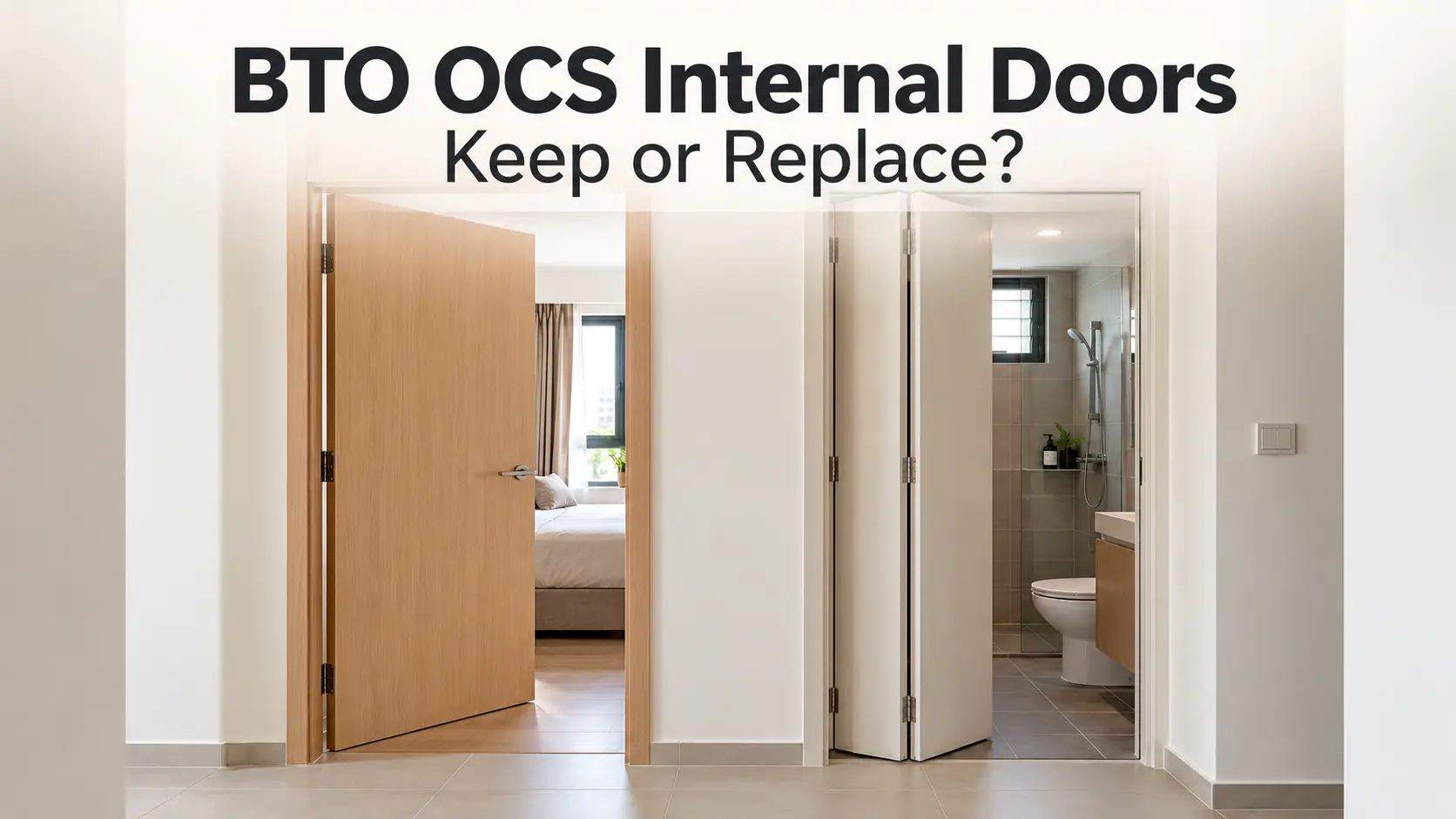
Contractors and ID firms working on BTO renovation projects commonly specify aluminium toilet doors, utility doors, and bedroom doors as part of a coordinated renovation package. Early engagement with the door supplier at the ID proposal stage typically reduces lead time and avoids specification changes during works.
Frequently Asked Questions
Answers to the questions most frequently raised by procurement teams, renovation contractors, architects, and homeowners planning aluminium door projects in Singapore.
Conclusion: Specifying Aluminium Doors for Singapore Projects
Aluminium remains the most practical and compliant door material for the full spectrum of Singapore property types — from HDB and BTO public housing to commercial towers, hospitality projects, and JTC industrial facilities.
The material's natural corrosion resistance, design flexibility, fire-rating capability, and alignment with BCA and HDB regulatory requirements make it the default specification for most project types. Understanding the distinctions between door configurations, profile grades, surface finishes, and compliance requirements at the specification stage significantly reduces the risk of post-handover defect claims and project delays.
For renovation contractors, interior designers, and architects working on Singapore projects, engaging an experienced aluminium door specialist early in the design process — particularly for HDB and BTO works with fixed regulatory requirements — is consistently the most efficient path to a compliant, durable outcome.
Leave A Comment