
Door Frame Selection in Singapore: Timber vs Metal Frames for Residential and Commercial Projects
Choosing a door leaf is only half the specification. The frame it sits in — the jamb, head and stop the leaf hinges against — carries its own decisions about material, fire performance, wall compatibility and hardware fit. Door frame selection in Singapore projects is rarely a simple aesthetic choice between timber and metal; it depends on the wall type, moisture exposure, whether a fire rating applies, and the hardware that will be fixed into it. Getting it wrong after fabrication or installation is costly to correct.
This guide is written for contractors, architects, interior designers, renovation firms, developers, facility managers and HDB or BTO renovation planners comparing timber and metal door frames on practical grounds. It focuses specifically on how frame material is selected, specified and coordinated, and points to HongRui's other guides for door-leaf comparisons, fire-door certification and HDB replacement procedures.
Quick answer: A door frame is the fixed structure — jamb, head and stop — that a door leaf hinges into and closes against. Timber frames suit dry, lower-traffic, non-rated openings and allow easier on-site adjustment. Metal frames suit fire-rated assemblies, wet or high-traffic areas, and heavier leaves. The right choice depends on the wall type, moisture exposure, fire-rating requirement and leaf specification for that opening.
Key Takeaways
- Select frame material against the wall type, moisture exposure and structural opening — not appearance alone.
- Fire-rated frames are usually part of a tested assembly on the door's Certificate of Conformity (CoC); they can't simply be swapped between materials.
- Frame rebate depth reduces the clear opening width below the leaf's nominal size — relevant for accessibility and furniture clearance.
- Hinges, closers, locks and digital locks all depend on frame material and thickness — confirm hardware before frame fabrication.
- HDB, commercial and fire-rated projects each carry different practical points; confirm specifics with the QP, fire-safety consultant, building management or HDB.
What Is a Door Frame and Why Material Choice Matters
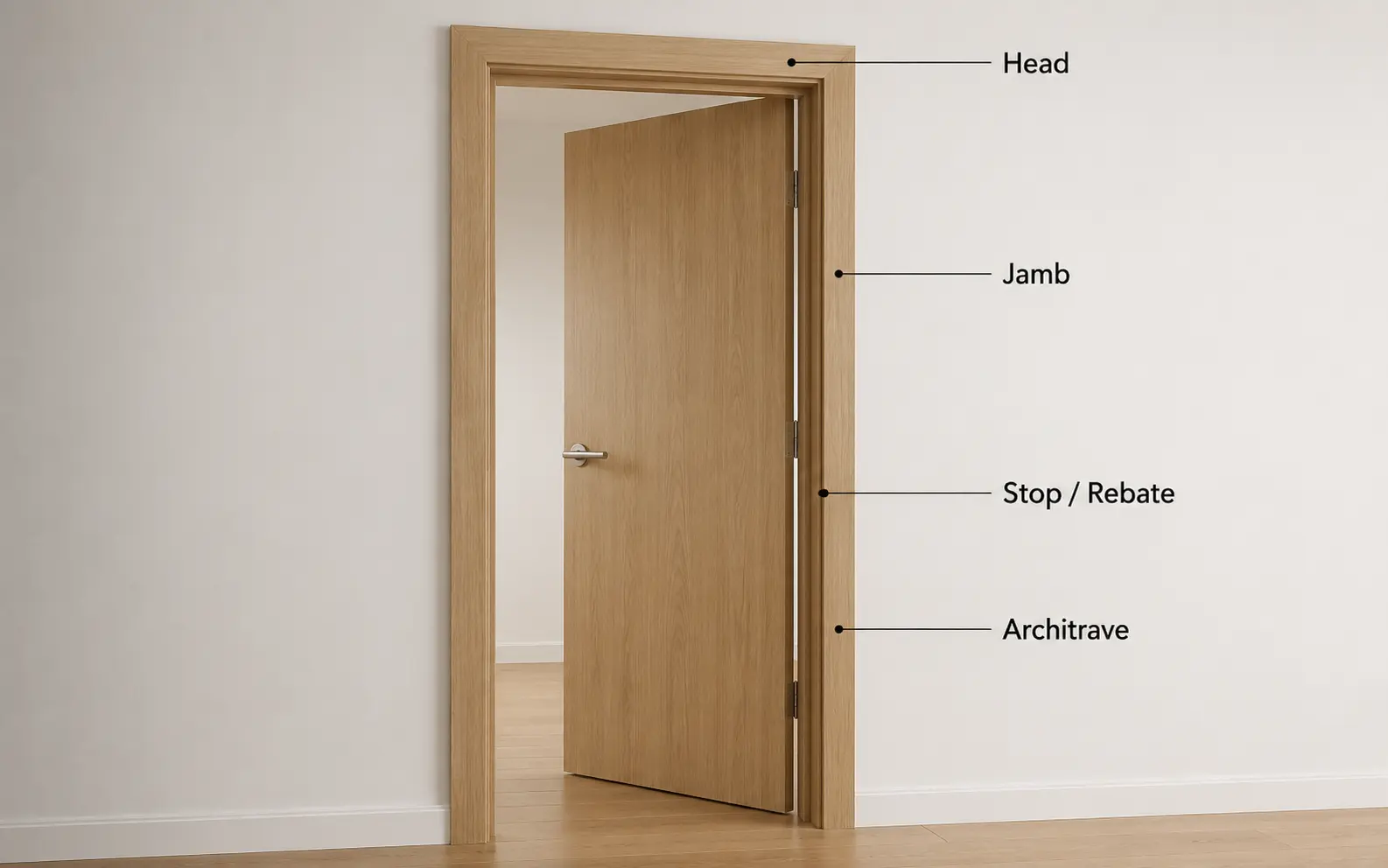
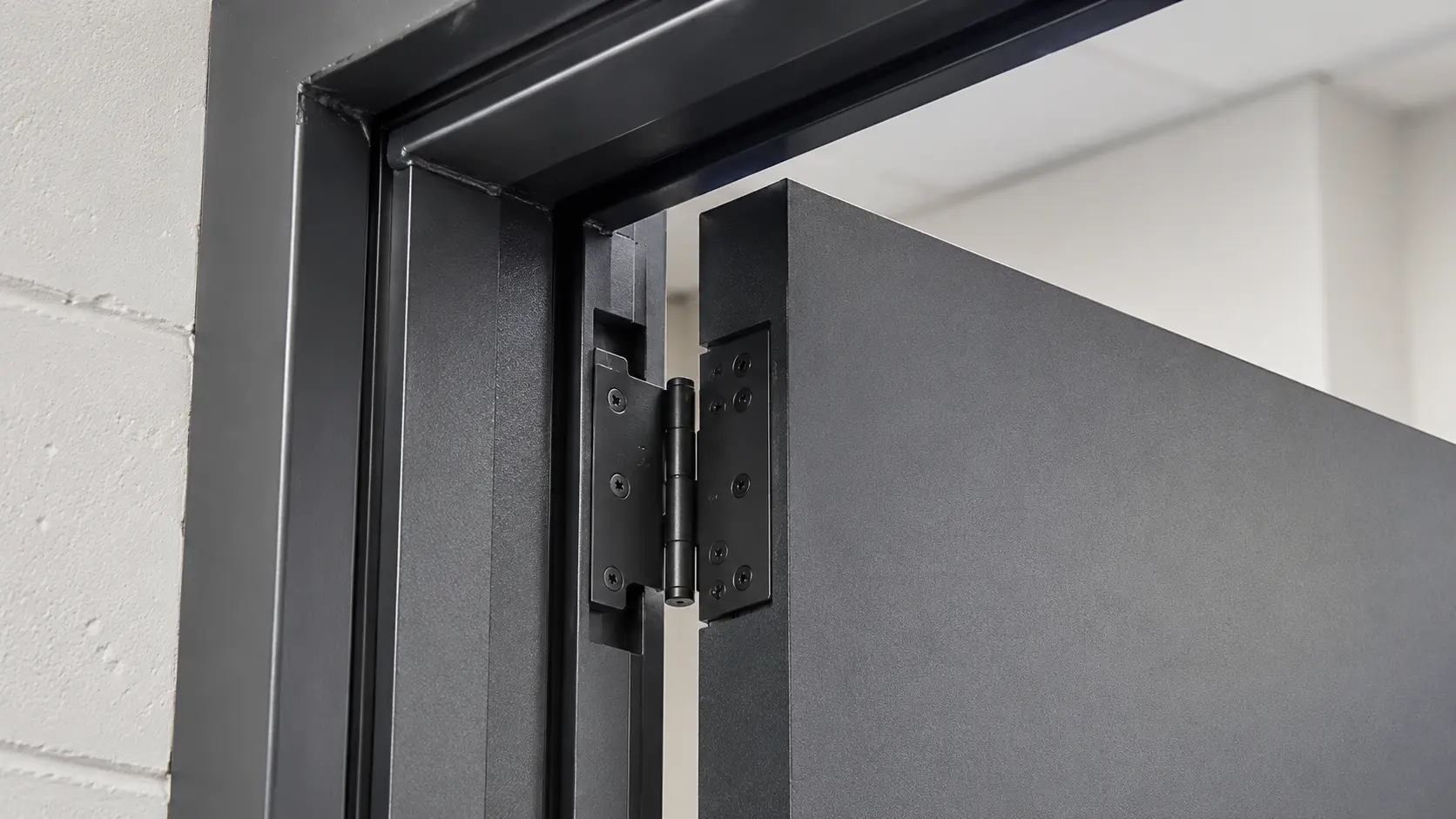
A door frame is the fixed surround built into a wall opening that holds the door leaf and provides the hinge, strike and seal line. It usually includes two jambs, a head, and a stop or rebate the leaf rests against when closed — structurally distinct from the leaf and far more disruptive to change once installed.
Because the frame is the harder-to-replace component, its material deserves the same attention as the leaf: it affects how the frame is fixed into the wall, the load and use it can carry, its performance in humid or exposed locations, whether it can form part of a fire-rated assembly, and its compatibility with the hardware specified.
Timber Door Frames: Characteristics and Common Uses
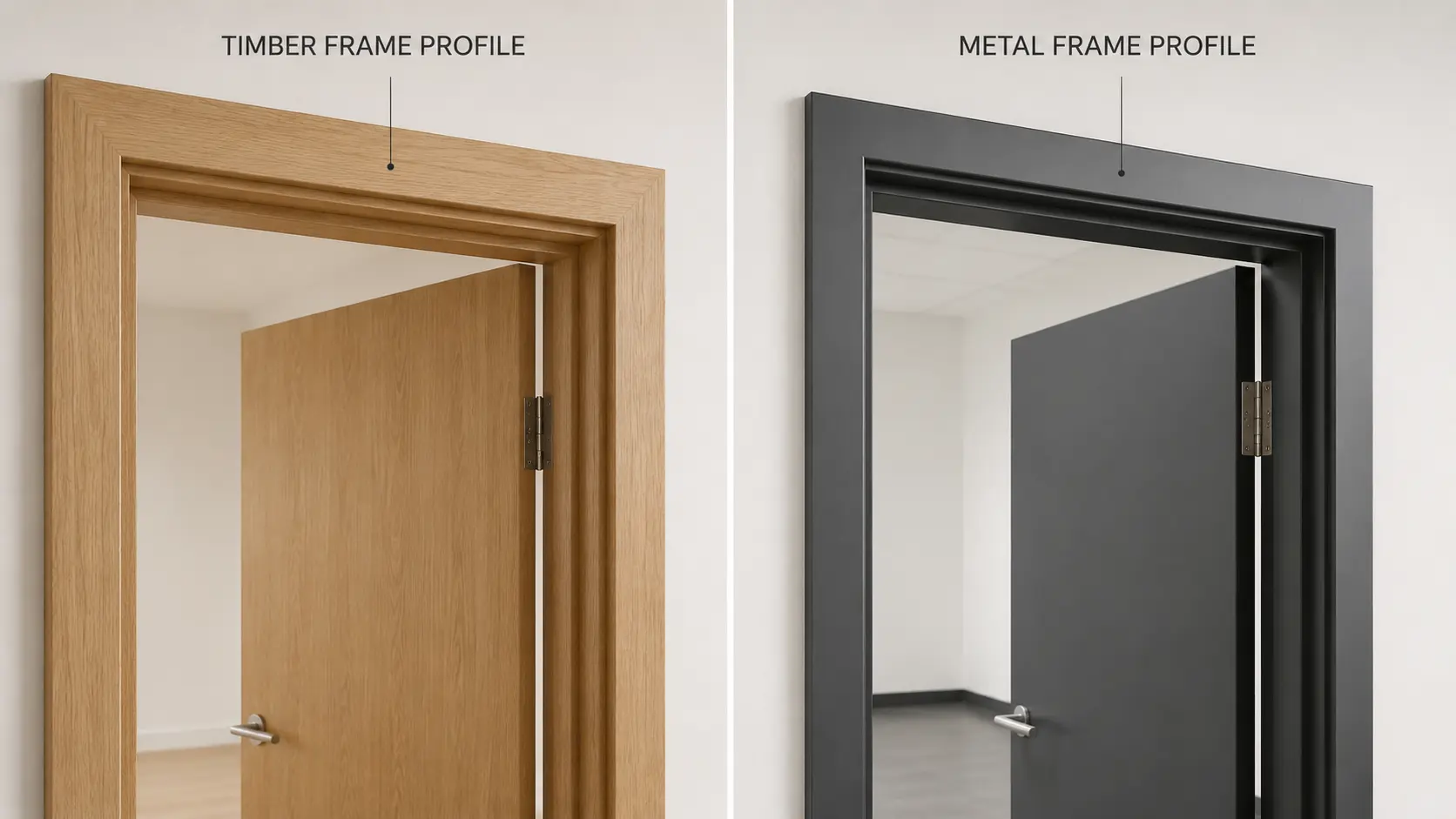
Timber frames are easier to cut, plane and adjust on site, useful for irregular openings or minor corrections during installation. They are common for internal residential doors, bedroom and study doors, and non-fire-rated commercial fit-outs where the wall is dry masonry, drywall or RC with a timber lining.
Timber is more sensitive to Singapore's humidity than metal. Sustained moisture — bathrooms, semi-outdoor yards, exposed corridors — can cause swelling or warping if species, treatment and finish aren't suited to the environment. Fire-rated timber frame assemblies exist, but this depends on the specific tested product, not timber as a category.
Metal Door Frames: Characteristics and Common Uses
Metal frames — typically pressed mild steel, sometimes stainless steel or aluminium — are generally more dimensionally stable than timber and less affected by humidity, which is why they're widely used in commercial, institutional and service-area applications, and in many HDB fire-rated main door assemblies. They carry heavier leaves with less long-term sag, suiting high-traffic openings such as staircases, service corridors and plant rooms.
Metal frames are usually fixed by grouting, bolting or welding to embedded lugs, rather than the screw fixings typical of timber. This needs earlier planning, since a grouted frame is harder to reposition than a timber frame that can still be shimmed on site. Finish (powder coating, galvanising) matters in humid or coastal locations, where the wrong finish shortens service life through corrosion.
Matching Frame Material to the Wall, Leaf and Location
Match frame material to three things before fabrication: the wall it sits in, the leaf it carries, and the environment it operates in.
- Wall type: RC, masonry, drywall and lightweight block accept frames differently — a frame designed for grouting into solid wall isn't automatically interchangeable with one for a stud partition.
- Leaf weight: heavier solid-core or fire-rated leaves need a frame and fixing method that won't sag or twist over time.
- Environment: bathrooms, kitchens, semi-outdoor areas and plant rooms favour materials and finishes that tolerate moisture, impact or washdown.
- Existing opening (renovation): confirm whether the new frame must fit the existing structural opening, or whether altering it needs sign-off from the relevant authority or management corporation first.
Specifying a heavy fire-rated leaf against a frame intended for light interior use is one of the more common coordination gaps between design intent and what gets built.
Fire-Rated Door Frame Considerations
Where a fire rating applies, the frame stops being a free material choice and becomes part of a tested assembly. Under SCDF's Fire Code and Singapore Standard SS 332, the door leaf, frame, hinges, seals and closer are treated as one system. The fire test certificate — commonly called a Certificate of Conformity (CoC) — records the specific frame tested with that leaf, including material, profile and how it was fixed into the test wall type.
In practice, a leaf rated for a given duration isn't automatically compliant in any frame of that rating; the frame, seals and hardware need to match the certificate, or be confirmed as an approved equivalent by the manufacturer. Industry sources commonly cite perimeter gap tolerances of a few millimetres for fire-rated assemblies, though the figure that applies to a specific door is the one on its own test certificate, not a general rule.
This is a brief flag, not a full compliance guide — see HongRui's guide to fire-rated door compliance in Singapore for certification mechanics, and timber vs metal fire-rated door material in Singapore for leaf-material comparisons. Always confirm current requirements with a fire-safety consultant, the QP, or SCDF.
HDB and BTO Door Frame Considerations
HDB main doors are generally classified as fire-rated elements, and the frame forms part of that classification rather than a separate decision. Many current HDB main door frames are metal, often because the certified assembly supplied for that flat type uses one — but this is project- and unit-specific, not a rule that applies identically to every flat or era of construction.
- Check an existing frame's condition before assuming it can be reused — cracked grouting, corrosion or movement at the jamb are reasons to replace rather than retain.
- Confirm whether the replacement must match the original fire-rating classification; HDB renovation rules generally require at least the same standard as what's removed.
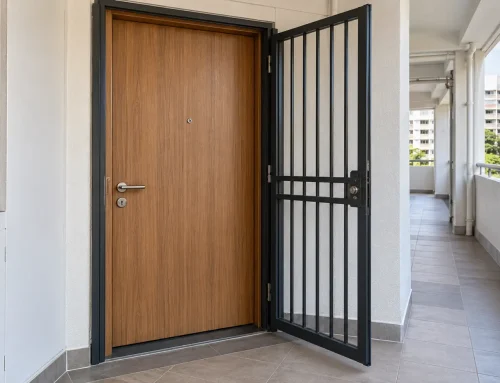
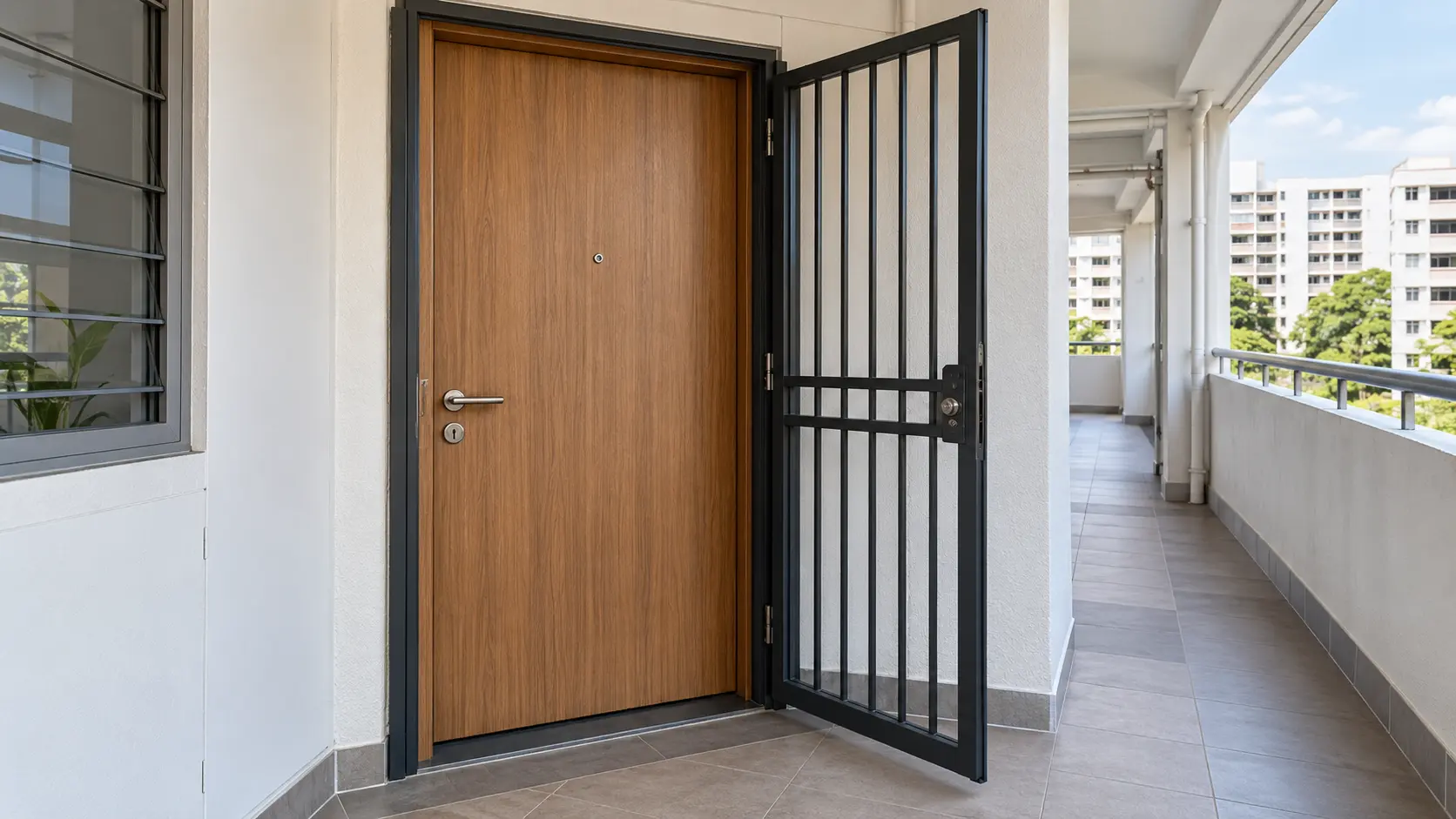
- Coordinate frame rebate and hardware preparation with any existing metal gate, since gate and door hinge positions are independent and can clash if unchecked.
- Verify digital lock compatibility with frame and door thickness before ordering, particularly where the lock body sits within the rebate.
For permit and replacement procedures, see HongRui's HDB main door replacement rules in Singapore, and confirm current requirements with HDB or a registered contractor before ordering.
Commercial and Institutional Frame Planning
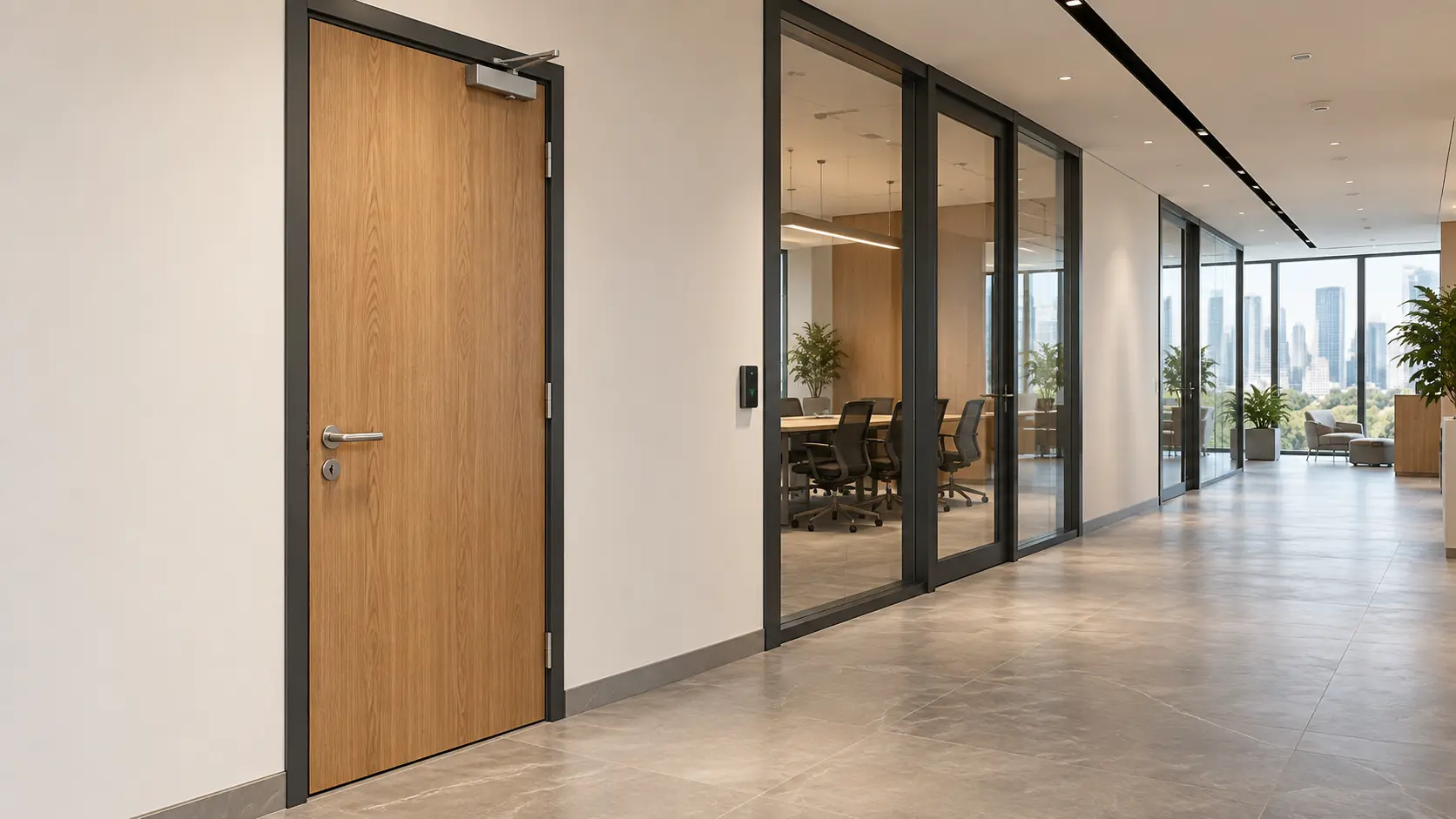
Commercial and institutional projects — offices, retail, schools, hotels, hospitals, industrial buildings, plant rooms, staircases and service corridors — see a wider mix of frame requirements than residential projects, because traffic, escape-route function, hygiene and wear vary so much by space type.
- High-traffic, back-of-house areas typically favour metal frames for durability and lower maintenance.
- Guest-facing areas often specify timber or timber-faced frames where rating and traffic allow.
- Healthcare and food-service environments need frames and finishes that tolerate frequent washdown.
- Escape routes and protected staircases follow the fire-safety design set by the project's QP and fire-safety consultant, not a general preference.
Larger projects with many door types benefit from a door and frame schedule to keep material, rating and hardware decisions consistent across openings.
Frame Profile, Rebate and Clear Opening Width
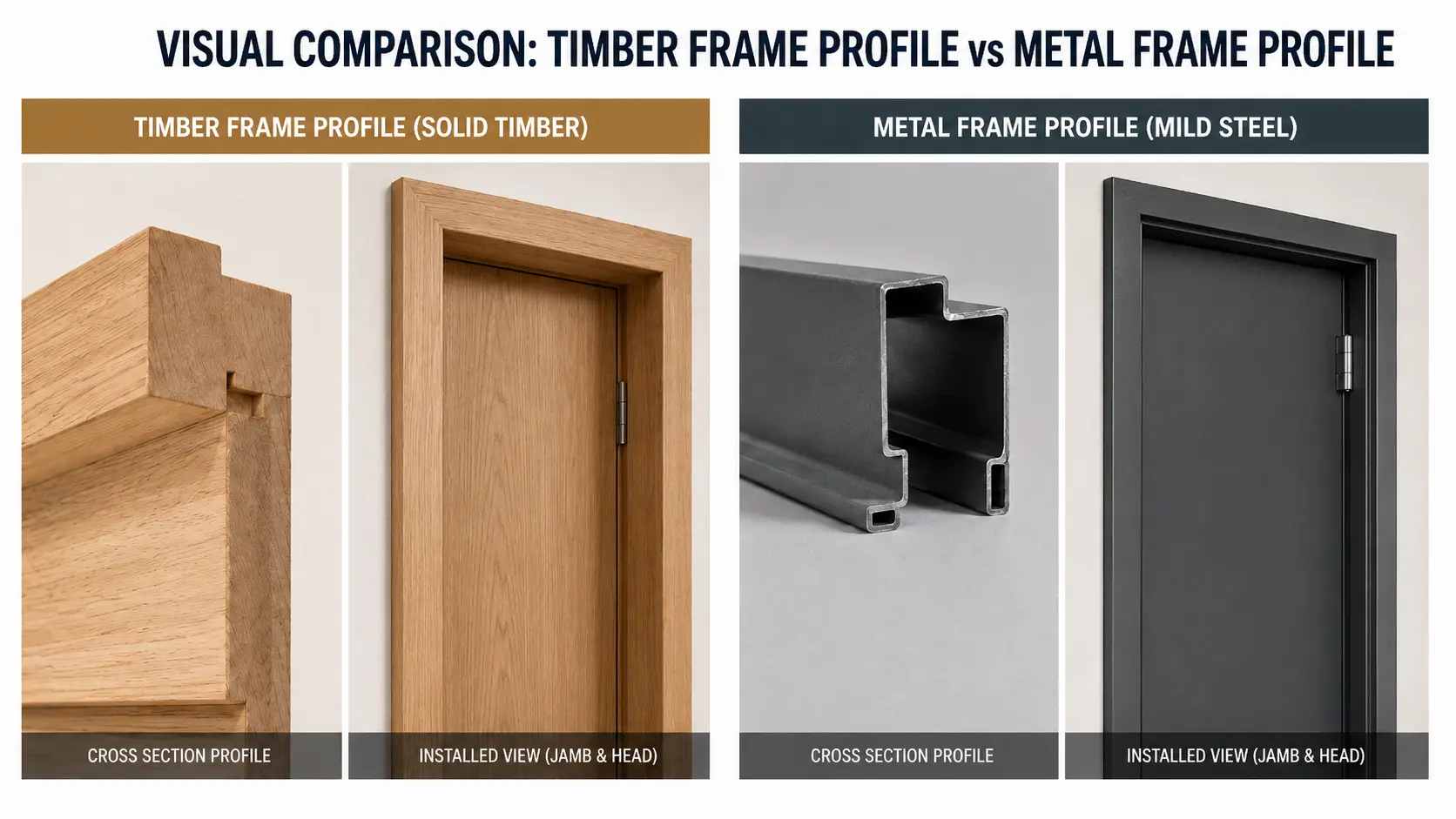
A frame's profile and rebate (stop) depth reduce the actual clear opening width below the nominal leaf size, since the leaf sits within the rebate rather than flush with the frame's outer edge. This matters most where a minimum clear opening width applies — for accessibility routes, furniture and equipment movement, or fire-escape clear widths.
Singapore's Code on Accessibility in the Built Environment, published by the BCA, has referenced minimum clear door opening widths in the region of 900 mm for accessible routes in various editions — though the applicable clause, figure and building type should always be checked against the current edition for the project at hand, since the Code is periodically reviewed.
Frame profile also affects hardware: a deeper rebate changes where a lock or digital lock body can sit, and a thicker section may need longer fixings or different hinge sizes than a slim profile — details easy to miss when frame and hardware are specified separately.
Frame Material and Hardware Compatibility
Hardware is fixed into the frame as much as the leaf, so frame material and thickness should be confirmed before hardware is finalised — not adjusted afterward to fit what was already fabricated.
| Component | What Frame Material Affects | What to Confirm |
|---|---|---|
| Hinges | Screw-fixing into timber vs. welded/bolted plates on metal frames | Hinge type suits frame material and leaf weight; fire-rated hinges where required |
| Door closer | Mounting differs between timber (surface screw-fixed) and metal (often reinforced) frames | Closer model fits frame thickness and matches the certified assembly on rated doors |
| Mortise lock / strike | Strike position must align with the frame's rebate; metal may need a reinforced pocket | Strike position, rebate depth and backset agreed before fabrication |
| Digital lock | Frame thickness and material affect where the body or backplate can be recessed | Lock model suits frame thickness; rating implications confirmed for rated doors |
| Panic hardware | Frame must give adequate fixing strength for push bars and strike housings | Frame and leaf are part of a tested assembly on escape-route fire doors |
| Frame anchors / fixings | Timber is typically screw- or nail-fixed; metal is often grouted, bolted or welded | Fixing method suits wall construction (RC, masonry, drywall) |
| Kick / protection plate | Fixing and finish should suit the frame and leaf material at the base of the opening | Plate doesn't interfere with rebate, fire seals or hardware clearances |
| Architrave / casing | Profile and finish need to suit the frame material and adjoining wall finish | Architrave doesn't conceal or compress intumescent seals on rated assemblies |
Common Frame-Selection and Installation Mistakes
- Choosing material on appearance alone, without checking wall type, moisture exposure or fire rating first.
- Assuming a certified leaf can pair with any frame of the same nominal rating, regardless of what the CoC specifies.
- Reusing an old frame for a heavier leaf without checking the frame and fixings can carry the load.
- Overlooking humidity when specifying timber for bathrooms, kitchens or semi-outdoor areas.
- Forgetting rebate depth reduces clear opening width, affecting accessibility or furniture-movement plans late in the project.
- Confirming only the rough wall opening, not the structural-opening tolerance the chosen frame actually needs.
- Specifying hardware before the frame is finalised, leading to digital locks or closers that don't fit on delivery.
- Treating "metal" as automatically more fire-resistant — rating is a property of the tested assembly, not the raw material; both timber and metal sets can achieve various ratings.
Pre-Installation Checklist
- Confirm wall type and structural opening size the frame must fit.
- Confirm whether a fire rating applies, and if so, whether the frame must match a specific CoC assembly.
- Decide whether the existing frame is reused or replaced; inspect its condition if reuse is considered.
- Check moisture, humidity or washdown exposure of the location.
- Confirm finish and corrosion protection for metal frames in wet or exposed areas.
- Confirm hinge, closer, lock and digital lock specs against frame material and thickness.
- Check the resulting clear opening width after the rebate.
- Confirm fixing/anchoring suits the wall construction, and update the door and frame schedule before fabrication.
Post-Installation Inspection
A short physical check after installation helps catch issues before handover:
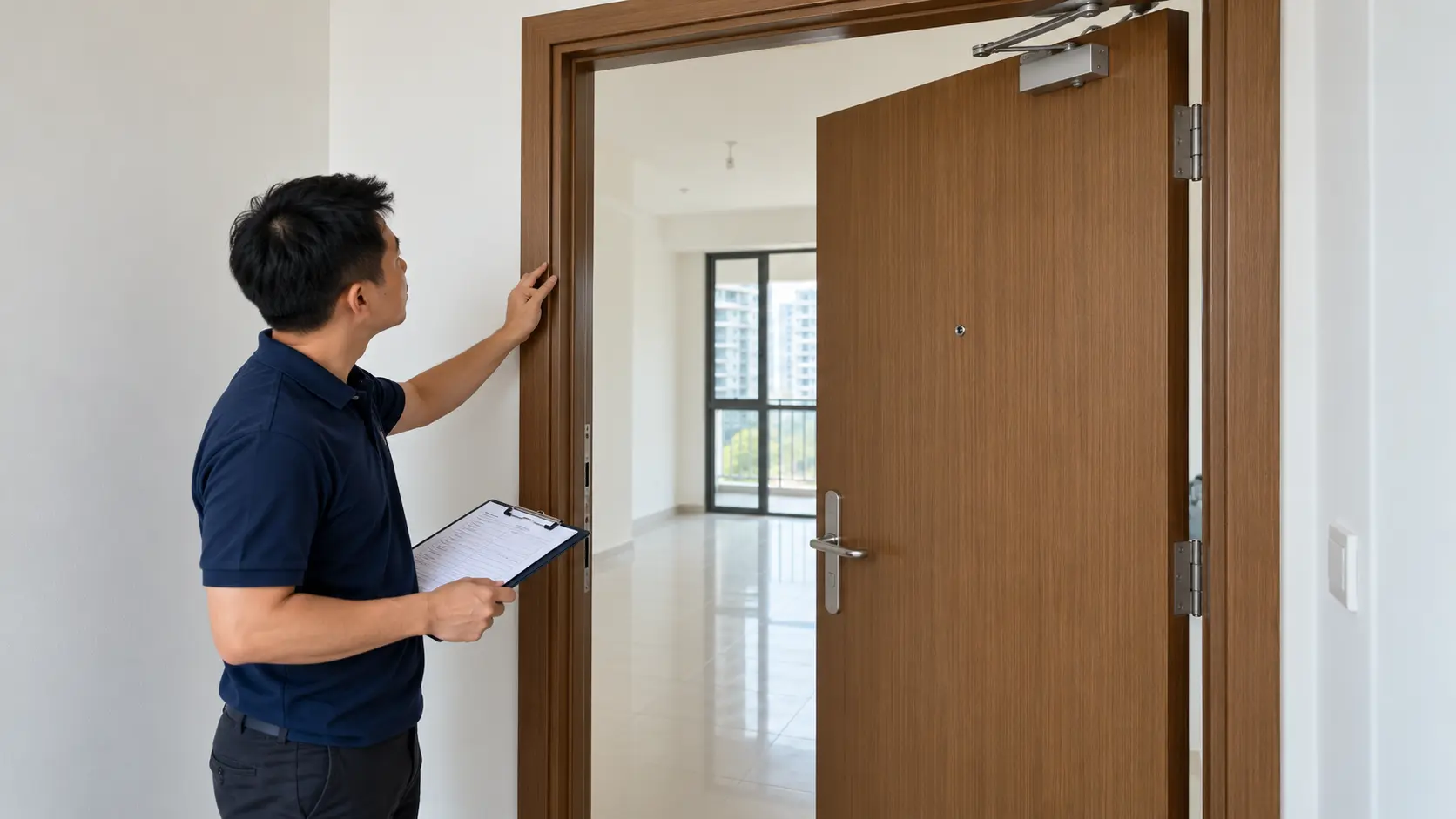
- Frame is plumb, level and square, with no visible twist along the jambs.
- Fixings or grouting are secure, with no movement at the jamb during use.
- Gaps between leaf and frame are even and within the specified tolerance.
- On fire-rated assemblies, intumescent strips and seals are continuous, undamaged and uncovered by paint or trim.
- Hinges, locks and closers operate smoothly without binding against the frame.
- Metal finishes show no early corrosion; timber finishes show no cracking or swelling at joints.
- Certification labels remain intact, and clear opening width matches the design requirement.
This guide provides general, educational information about door frame selection practices in Singapore and does not replace project-specific advice. Requirements can vary with the approved building plan, fire-safety design, occupancy, existing conditions and the relevant authority's current guidelines. Always confirm project-specific requirements with the Qualified Person, a fire-safety consultant, building management, HDB or the relevant authority before finalising a specification.
Frequently Asked Questions
How do I choose between a timber and a metal door frame?
The choice generally depends on wall type, moisture exposure, fire-rating requirement and leaf weight, rather than appearance alone. Timber suits dry, lower-traffic, non-rated openings and allows easier on-site adjustment. Metal suits fire-rated assemblies, wet or high-traffic areas, and heavier leaves. Match the frame to the wall first, then the leaf, then the environment.
Can a metal door frame be installed with a timber door leaf, or vice versa?
In a non-fire-rated application, this is often possible if dimensions, hardware preparation and finishes are coordinated. For fire-rated doors, the frame and leaf are usually tested and certified together as one assembly, so substituting materials isn't automatically compliant even if both can individually achieve ratings. Confirm with the manufacturer or a fire-safety professional first.
Do all HDB main doors require the same frame material?
No single material applies to every HDB flat. Many current main door assemblies use metal frames as part of their certified fire-rated specification, but this depends on the unit's classification, the supplier's tested assembly and the block's renovation history. Confirm current requirements with HDB, a registered contractor, or the relevant documentation before ordering.
Does a fire-rated door require a specific frame material?
Not a single universal material, but the frame must form part of the same tested assembly as the leaf, as recorded on the Certificate of Conformity. Both timber and metal frames can be used in fire-rated assemblies if the specific combination has been tested and certified together. Confirm requirements with the fire-safety consultant or QP for the building.
Can an existing door frame be reused when replacing the door leaf?
Sometimes, but only if the frame is structurally sound, dimensionally compatible with the new leaf, and free of damage such as corrosion, rot or jamb movement. For fire-rated doors, the existing frame also needs to already form part of a valid certified assembly matching the new leaf — confirm this with the manufacturer rather than assume it.
How does frame material affect digital lock or other hardware installation?
Frame material and thickness affect where a digital lock's strike, mortise body, hinges and closer can be fitted, and whether reinforcement is needed to carry the hardware securely. On fire-rated doors, hardware fitted into the frame should match the door's certified specification, since unsuitable cutting or fixing can affect fire performance.
What information should a contractor provide when ordering a new door frame?
Contractors should provide the wall type and thickness, the structural opening size, the required fire rating if any, the door leaf specification it pairs with, and the hardware to be fitted, including locks, closers and digital locks. A marked drawing or door and frame schedule alongside this reduces the risk of mismatched orders.
Conclusion
Door frame selection deserves the same upfront attention as the door leaf, because the frame is harder to change once built into a wall. Timber and metal frames each suit different combinations of wall type, moisture exposure, traffic and fire-rating requirement, and the right choice comes from matching the frame to the specific opening rather than a single project-wide preference. HDB, commercial and fire-rated projects each carry their own considerations, which is why project-specific verification with the QP, fire-safety consultant, building management or HDB remains essential. Careful drawings, accurate measurements and early coordination between architect, contractor and door supplier remain the most reliable way to avoid frame-related delays on site.
Project teams can review HongRui's related door, frame and fire-rated door resources when coordinating frame material, door leaf compatibility, hardware and installation requirements.

Leave A Comment