BTO Door Defect Checklist: What to Check Before Renovation Starts
A BTO door defect checklist helps you inspect the main door, door frame and gate for faults such as poor alignment, uneven gaps, loose hinges and lock problems while the flat is still unrenovated. HDB advises owners to report defects within one month of key collection and before renovation begins. This guide is for new BTO owners, renovation contractors and interior designers.
Quick answer
Inspect every door and gate in daylight at key collection, photograph each fault with the door open and closed, and submit a rectification request to HDB before any renovation work starts. HDB covers new flats with a one-year Defects Liability Period (DLP) from key collection, so early reporting keeps responsibility clear.
Key takeaways
- The DLP is one year from key collection. The one-month mark is HDB's advice on when to report, not the end of the DLP.
- Report before renovation, so nobody has to work out whether a fault came from construction or renovation works.
- Check operation (closing, latching, scraping) as well as appearance.
- Do not remove a door closer, and do not adjust or replace a door or gate before reporting.
What counts as a BTO door defect?
A BTO door defect is a fault in the door, frame, hardware or gate that stops it from operating properly or looking as delivered, and that comes from construction or installation rather than later use or renovation. Examples include a door that will not close, a latch that misses its strike plate, and a finish that arrived damaged.
HDB states that newly completed flats have a 1-year DLP from key collection, and that owners should report items within one month and before renovation begins. HDB explains that this avoids having to investigate whether a defect was inherent to construction or caused by renovation works. If renovation cannot wait, HDB says it can rectify defects during renovation, provided the works are not hindered, or afterwards.
Requirement or advice?
The 1-year DLP is HDB's stated coverage. The one-month reporting window and "before renovation" are HDB's advice on timing. The symptom checks below are general inspection guidance, not HDB acceptance criteria. HDB's pages reviewed do not publish a single gap tolerance, so avoid quoting millimetre limits from forums.
BTO door defect checklist by symptom
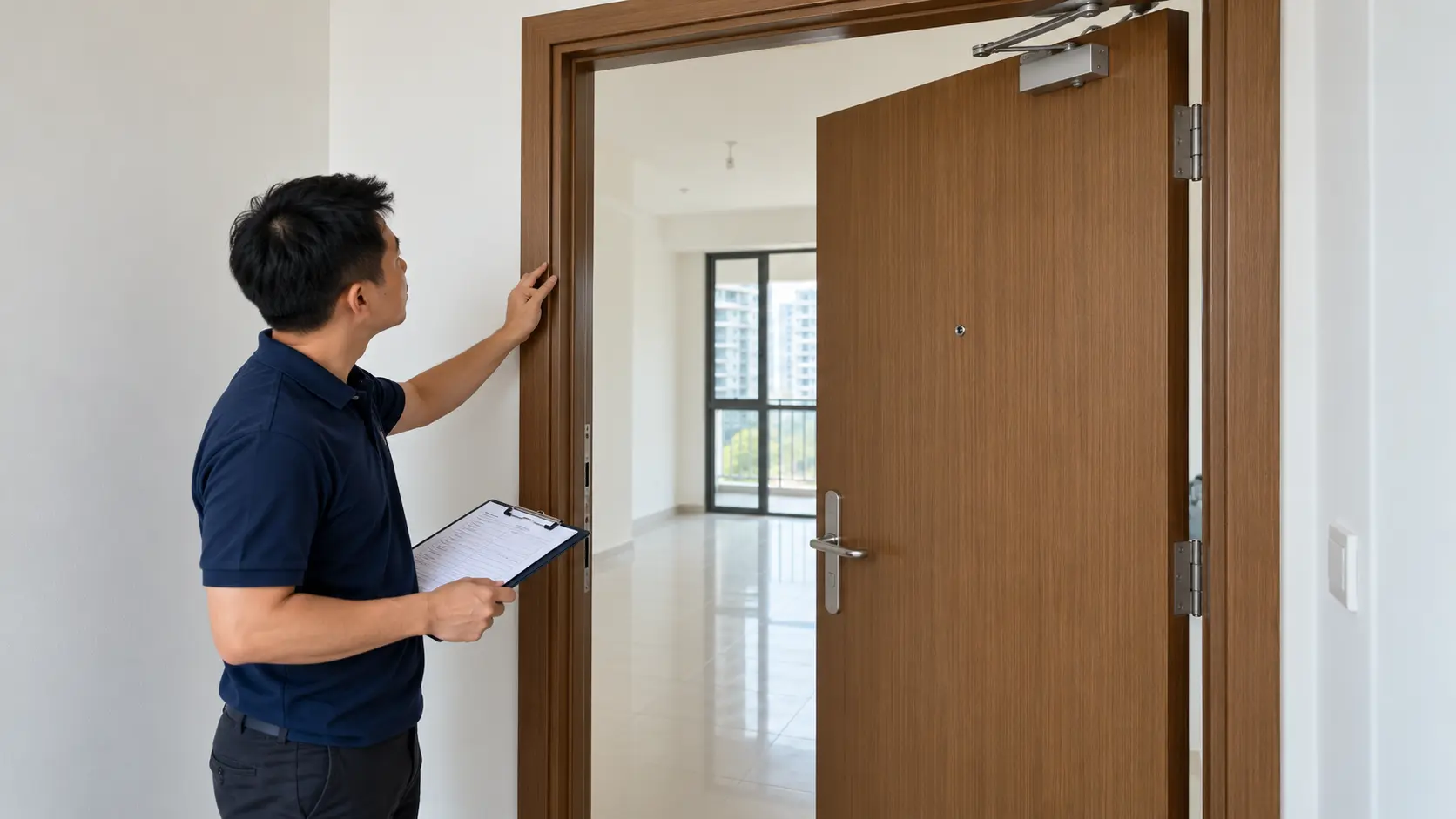
Work through each door (main door, bedroom doors, bathroom doors) and the gate. Open and close each one several times, and view it from both sides.
| What you notice | What it may point to | What to record |
|---|---|---|
| Door does not close properly | Frame out of square, sagging leaf or hinge problem | Where it catches; video of closing |
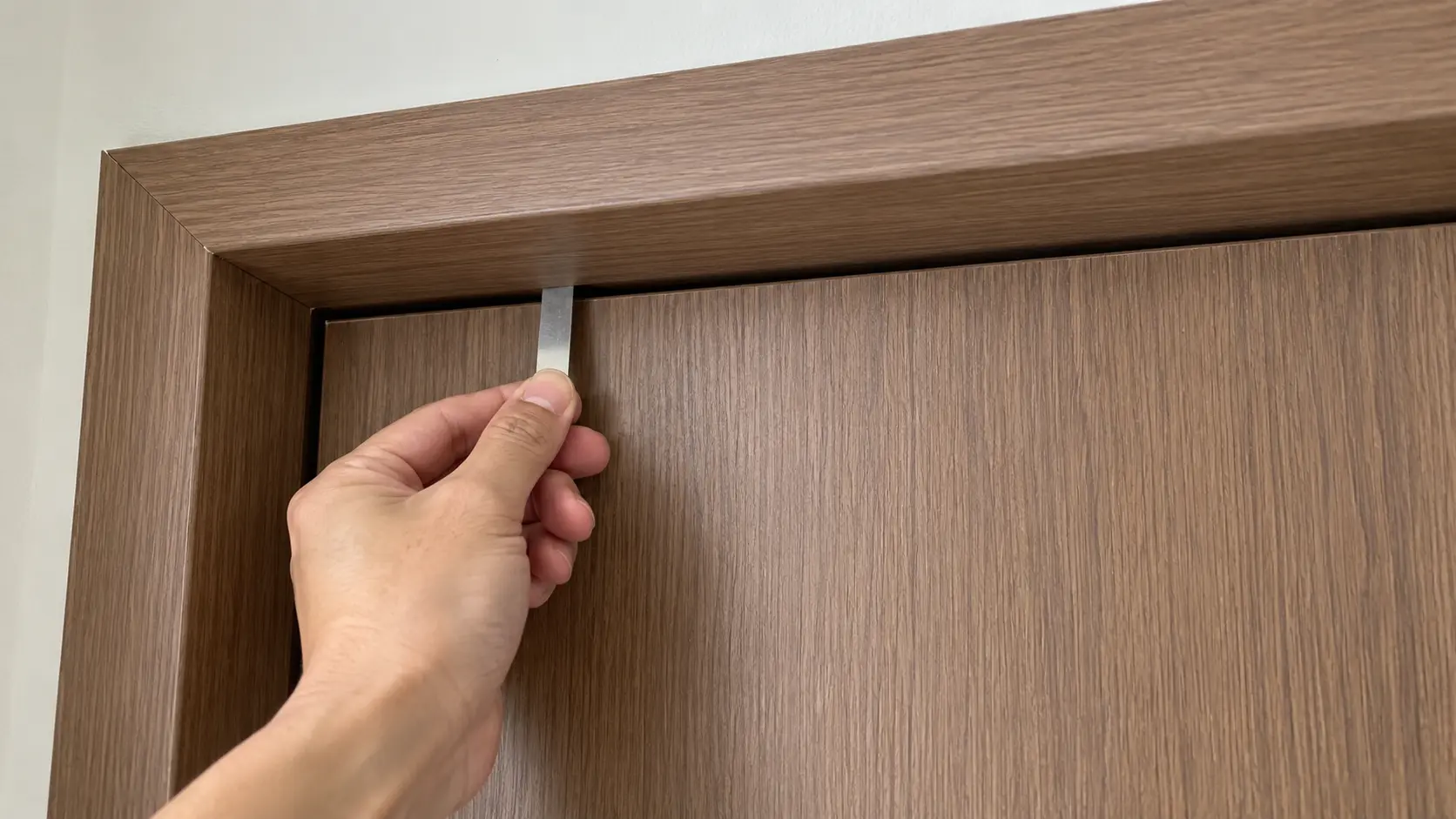
| Uneven gaps (BTO door gap) | Frame or leaf not level or plumb | Photos of head and both sides with a straight edge |
| Door scraping the floor | Leaf sag, hinge issue or floor finish level | Scrape marks; where the door rubs |
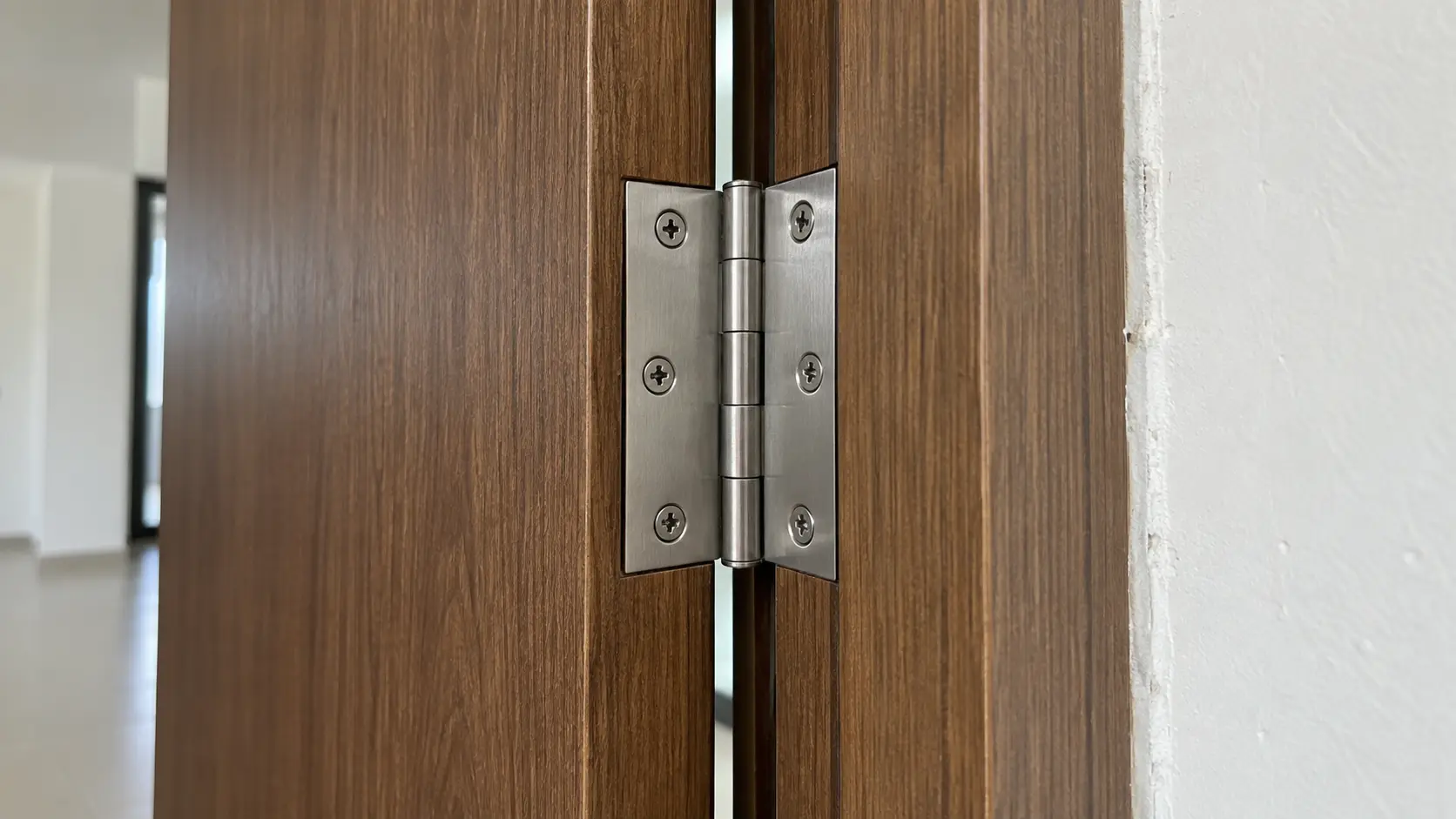
| Loose or misaligned hinges | Missing or loose screws, poor fixing to frame | Close-up of each hinge |
| Lock or latch does not engage | Strike plate misaligned or latch not seated | Whether it fails only when fully pushed |
| Frame gap to wall or visible cracks | Poor fixing or finishing at the frame edge | Wide photo plus close-up |
| Chips, dents or scratches | Damage during delivery or finishing | Photos with a coin for scale, dated at key collection |
| Door will not stay closed or opens by itself | Leaf or frame out of plumb | Door position when released |
Door frame and alignment checks (BTO door frame defect)
Most operating problems trace back to the frame. A frame that is out of plumb or twisted makes even a well-made door bind, scrape or leave uneven gaps, so inspect the frame before blaming the leaf.
- Sight along the frame edges for bowing or twisting.
- Check that the gap around the leaf looks consistent at the head, latch side and hinge side.
- Look for cracks, hollow-sounding finish or gaps where the frame meets the wall.
- Confirm the frame is firmly fixed and does not move when the door is pushed.
Frame material affects how much correction is possible on site, which is covered in HongRui's guide to timber and metal door frame selection.
Gate and door closer checks
For the gate, check that it swings freely, aligns with its frame and that the bolts slot in and retract smoothly. HDB's home care guidance specifically covers gate bolts that cannot slot or retract properly, so record this if you see it. If you plan to change the gate later, see HongRui's metal gate guide for HDB and BTO.
Do not remove the door closer
HDB states that fire-rated doors at flat entrances are fitted with a self-closing door closer that must not be removed, because it keeps the door closed during a fire. Requirements can vary by flat and project, so confirm details with HDB rather than assuming. See also HongRui's HDB fire-rated door guide.
Check that the closer is attached firmly, and that the door closes fully from a partly open position without slamming or stalling.
How to report door defects before renovation
- Inspect in good light. Use daylight or a torch, and check all sides of the door and frame.
- Photograph and film. Take dated photos and short videos of each fault, plus wide shots showing location.
- Write a list. Note the room, item and symptom in plain words, for example "main door catches at top corner".
- Submit the request. HDB accepts rectification requests online or at the Building Service Centre in your precinct.
- Hold off on door and gate works. Let rectification finish, or agree the sequence with HDB if renovation cannot wait.
- Keep records. Save confirmations and photos until the DLP ends.
HDB states that repairs usually take less than two weeks. After the DLP, owners engage a repair contractor. Confirm current procedures on HDB's website before you submit.
Common mistakes when inspecting BTO doors
- Checking looks only. A door can look fine and still latch badly, so test the operation.
- Adjusting hinges first. Changing the door before reporting removes the evidence of its delivered condition.
- Waiting for the contractor to inspect. Once works begin, causes become harder to separate.
- Replacing before reporting. Door and gate replacement is covered by HDB's renovation guidelines, so read them before ordering. HongRui's BTO main door guide explains planning.
- Treating a thin gap as a defect. Judge functional problems first, then let HDB assess borderline appearance.
Notes for contractors and interior designers
Contractors and designers can protect the schedule by asking owners for the defect list and rectification status before mobilising. Door thresholds, digital-lock positions and gate clearances all depend on a door that operates correctly, so a pending door fault is worth resolving before carpentry and flooring are finalised. Where a door will be replaced, agree measurements only after HDB confirms the existing condition.
BTO door defect FAQ
Must I report BTO door defects within one month?
HDB advises reporting within one month of key collection and before renovation begins. This is timing advice, not the end of coverage, because the DLP runs for one year. If you find a fault later, report it promptly, since renovation makes it harder to show where the fault came from.
Who fixes a BTO door that does not close properly?
Within the DLP, submit a rectification request to HDB online or at the Building Service Centre in your precinct. After the DLP, you can engage a repair contractor and approach your HDB Branch for further help. Avoid removing a door closer while the issue is being sorted out.
Is an uneven gap around a BTO door a defect?
It can be, but it depends on how large the difference is and whether the door operates well. The HDB pages reviewed do not state a single gap tolerance. Photograph the gap, note any binding or latching problem and let HDB assess it.
Can I replace my door or gate before defects are cleared?
It is better to wait. HDB asks owners to report defects before renovation, and replacing a door or gate changes the condition being assessed. Check HDB's renovation guidelines for main doors, internal doors and gates, and confirm any approval requirements before ordering.
Is every BTO main door fire-rated?
Do not assume so for your unit. HDB describes fire-rated doors at flat entrances as having self-closing door closers, but requirements can depend on the flat and project. Confirm with HDB or the Building Service Centre before changing or replacing the door.
Do I need to hire a defect inspector?
The HDB pages reviewed do not require one. Many owners inspect themselves using a checklist, while some choose an independent inspector for extra thoroughness. Either way, submit findings to HDB with clear photos before renovation starts.
Conclusion
A BTO door defect checklist works best when it is used at key collection, before carpentry, flooring or door changes begin. Check operation, alignment, hardware, finish and the gate, record each fault with dated photos and report through HDB's channels while the one-year DLP is running. Confirm current HDB procedures, since they can change.
Project teams can review HongRui's door and gate manufacturing information to compare available materials, applications and installation considerations.