

HDB and BTO interior door guide
HDB Bedroom Door Singapore Guide: Materials, Privacy, Sound Reduction and Space-Saving Options
Choosing an HDB bedroom door in Singapore is not only a design decision. The leaf, core, frame fit, seals and opening method affect privacy, sound transfer, space and durability. This guide helps homeowners and renovation teams compare practical options before ordering or replacement.
Quick answer
For most HDB bedrooms, a hinged laminate timber door offers the most balanced combination of privacy, easy maintenance and reliable closing. Choose a denser solid-core construction when conversational privacy matters. Consider a sliding door when swing clearance is genuinely limited, while recognising that perimeter gaps usually make sliding systems less effective at controlling sound.
Key takeaways
- Compare the internal core, not only the visible laminate or veneer finish.
- A denser door, accurate frame fit and perimeter seals work together to reduce sound transfer.
- A hinged door normally gives better edge sealing than a basic surface-mounted sliding door.
- Measure the finished opening, floor level, frame rebate, swing direction and hardware positions before fabrication.
- Internal bedroom doors are different from HDB entrance doors; confirm any project-specific fire-safety or renovation condition before altering an opening or wall.
HDB Bedroom Door Singapore Selection Guide
Start with the room's functional problem. A bedroom facing a busy living area may prioritise privacy and sound control, while a doorway beside a bed or wardrobe may need careful swing planning. Handle height, closing force and safe operation may also matter for children or elderly residents.
Assess four parts together: core construction, surface finish, opening method and installation quality. A useful brief states the privacy level, available floor and wall space, preferred finish, lock type and whether the existing frame will remain.
Bedroom Door Materials and Core Options
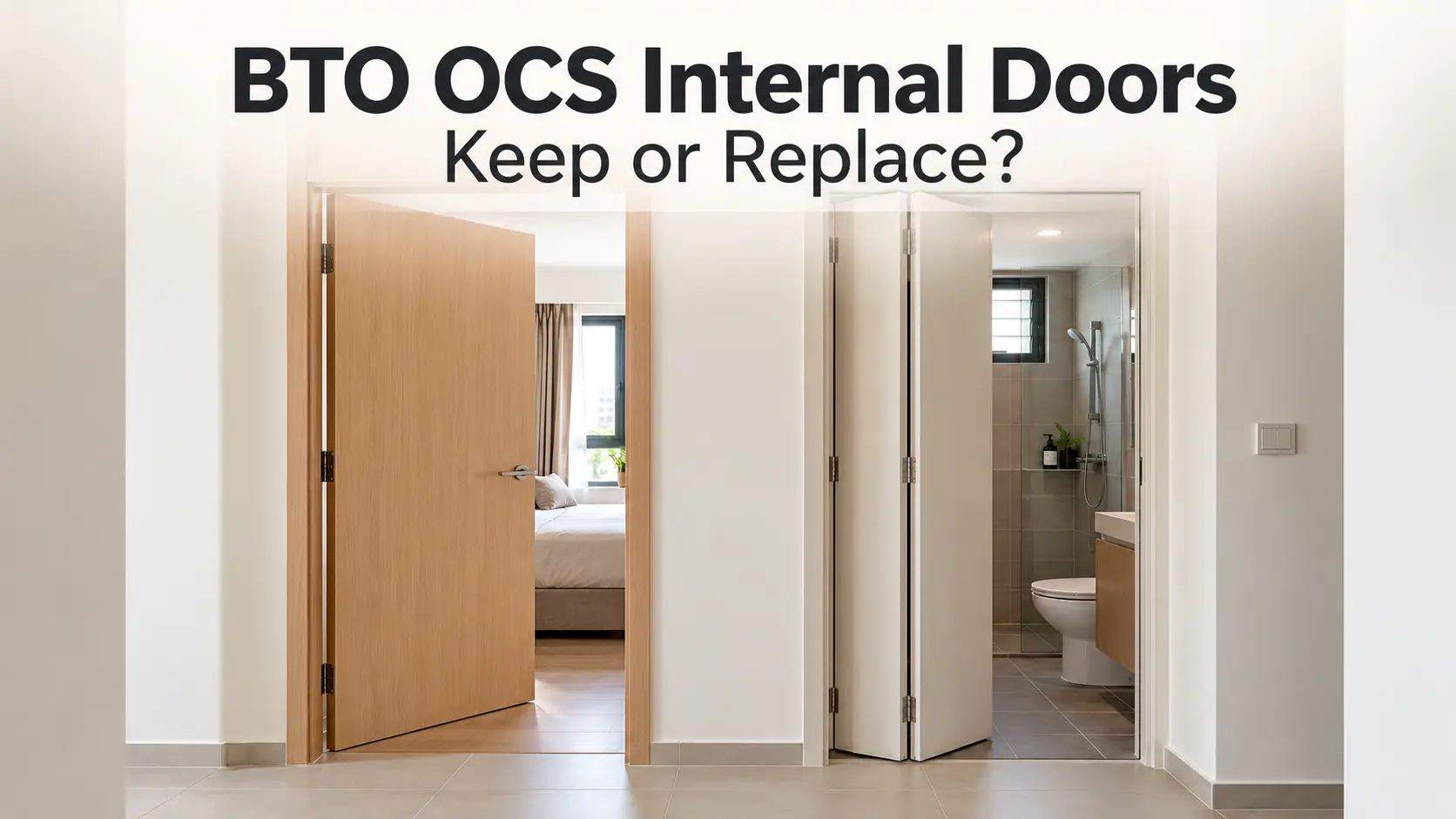
Most HDB and BTO bedroom doors are timber or engineered-timber products with a decorative finish. Because “timber door” can describe several constructions, ask the supplier to identify the core and edge structure. HongRui's guide to non-fire-rated timber doors and their applications explains how standard internal doors differ from certified fire-door assemblies.
| Option | Typical characteristics | Where it may suit | Points to confirm |
|---|---|---|---|
| Hollow or honeycomb core | Lightweight, easy to operate and generally economical | Low-noise bedrooms, guestrooms or simple replacement work | Reinforcement at hinges and lockset; limited sound reduction |
| Engineered or semi-solid core | More substantial feel and mass than a basic hollow-core leaf | General HDB bedrooms needing a balance of weight and privacy | Actual core composition and product-specific performance |
| Solid-core bedroom door | Dense construction that can support better acoustic separation | Home offices, master bedrooms and rooms beside active living areas | Leaf weight, frame condition, number and rating of hinges |
| Solid timber | Natural material with distinctive grain, weight and repairable surfaces | Selected interiors where natural timber is part of the design brief | Moisture movement, finishing on all faces and maintenance expectations |
Laminate, veneer or painted finish
A laminate bedroom door uses a decorative sheet over the substrate, offering consistent colour, woodgrain or texture and easy cleaning. Veneer provides natural timber grain, while paint allows precise colour matching. The finish does not determine sound performance: two visually identical doors can contain different cores, so ask for the construction specification.

Bedroom Door Privacy and Sound Reduction
Bedroom door privacy includes visual privacy, reliable locking and conversational privacy. No ordinary bedroom door should be called “soundproof” without tested evidence. A denser leaf can reduce sound transmission better than a light hollow leaf, but gaps around the head, jambs and floor may become the weakest path.
Practical ways to improve conversational privacy
- Select sufficient leaf mass. Consider an engineered or solid-core door where speech privacy matters.
- Check the frame. The door should close squarely with consistent gaps.
- Use compatible perimeter seals. They can reduce leakage at the head and jambs.
- Review the bottom gap. Coordinate any drop seal with flooring, ventilation and accessibility.
- Avoid unverified ratings. For a stated Rw or STC value, request a report for the complete tested door set.
The same principles of mass, sealing and frame fit are discussed in HongRui's guide to reducing noise through a door opening. For a bedroom, the hardware and seal detail should be adapted to an internal, non-fire-rated application rather than copied automatically from an entrance door.
Hinged or Sliding Bedroom Door for an HDB Flat
A hinged door needs a clear swing arc but closes against frame stops, allowing more consistent perimeter contact. It usually suits rooms where privacy matters more than saving floor area.
A sliding bedroom door for an HDB flat can free the swing zone beside furniture. A surface-mounted slider still needs adjacent wall clearance and tends to retain gaps, so it may provide less conversational privacy than a well-fitted hinged door.
| Opening type | Main advantage | Main limitation | Planning requirement |
|---|---|---|---|
| Hinged swing door | Reliable closing, familiar operation and better sealing potential | Needs a clear swing arc | Confirm handing, furniture positions and switch locations |
| Surface-mounted sliding door | Saves floor area at the doorway | Uses adjacent wall space and usually leaves perimeter gaps | Provide clear wall travel, track support and a floor guide |
| Pocket sliding door | Door disappears into the wall cavity | More complex access, maintenance and wall coordination | Verify wall construction, concealed services and whether alteration is permitted |
A sliding door still needs a clear wall face or purpose-built pocket. Draw its open and closed positions together with furniture, switches and air-conditioning controls before confirming the system.
HDB and BTO Bedroom Door Considerations
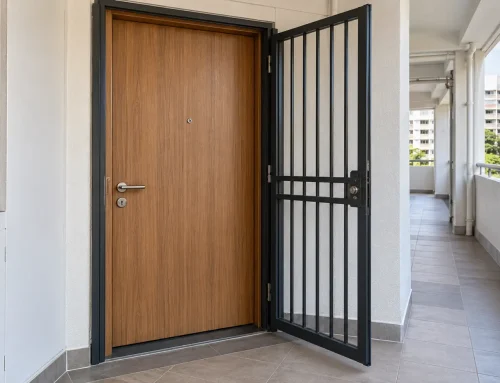
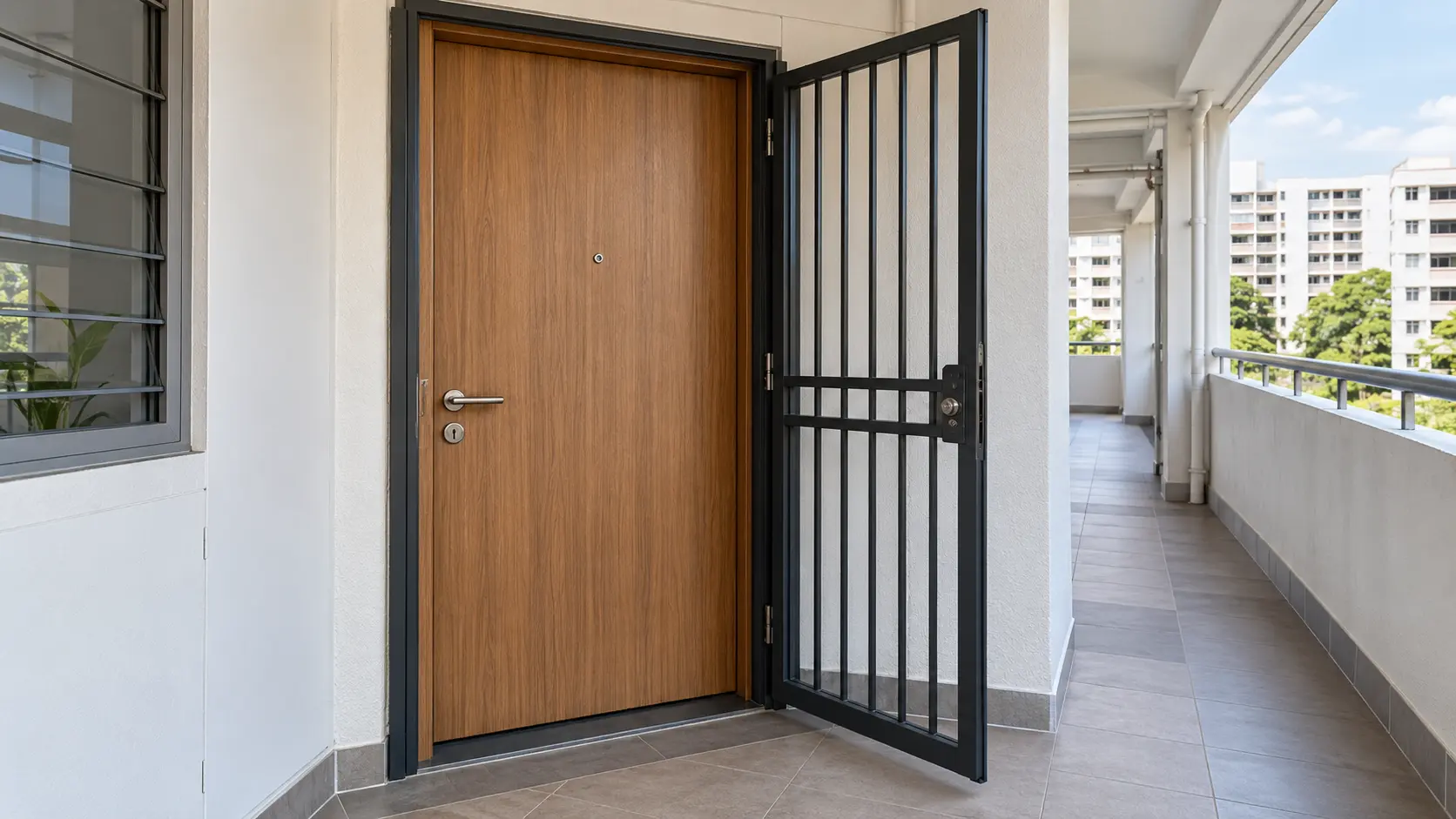
An internal BTO room door is different from the flat entrance door. SCDF's Fire Code addresses fire doors where openings form part of fire-resisting construction, including protected routes. A standard bedroom door within a dwelling is therefore not automatically fire-rated simply because the home is an HDB flat. Unusual layouts or project specifications should still be checked.
Scope also matters. Replacing a leaf within a sound frame differs from widening or relocating an opening. Before work affects a wall, concealed services or structural elements, confirm the current conditions through HDB's renovation channels and the appointed contractor.
New BTO renovation planning
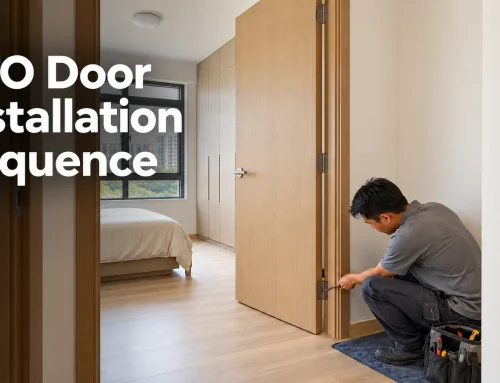
For a new BTO bedroom door, inspect the provided leaf, frame and hardware before full replacement. Retaining a square, sound frame may reduce hacking and touch-up work, but a heavier leaf may require stronger hinges or reinforcement.
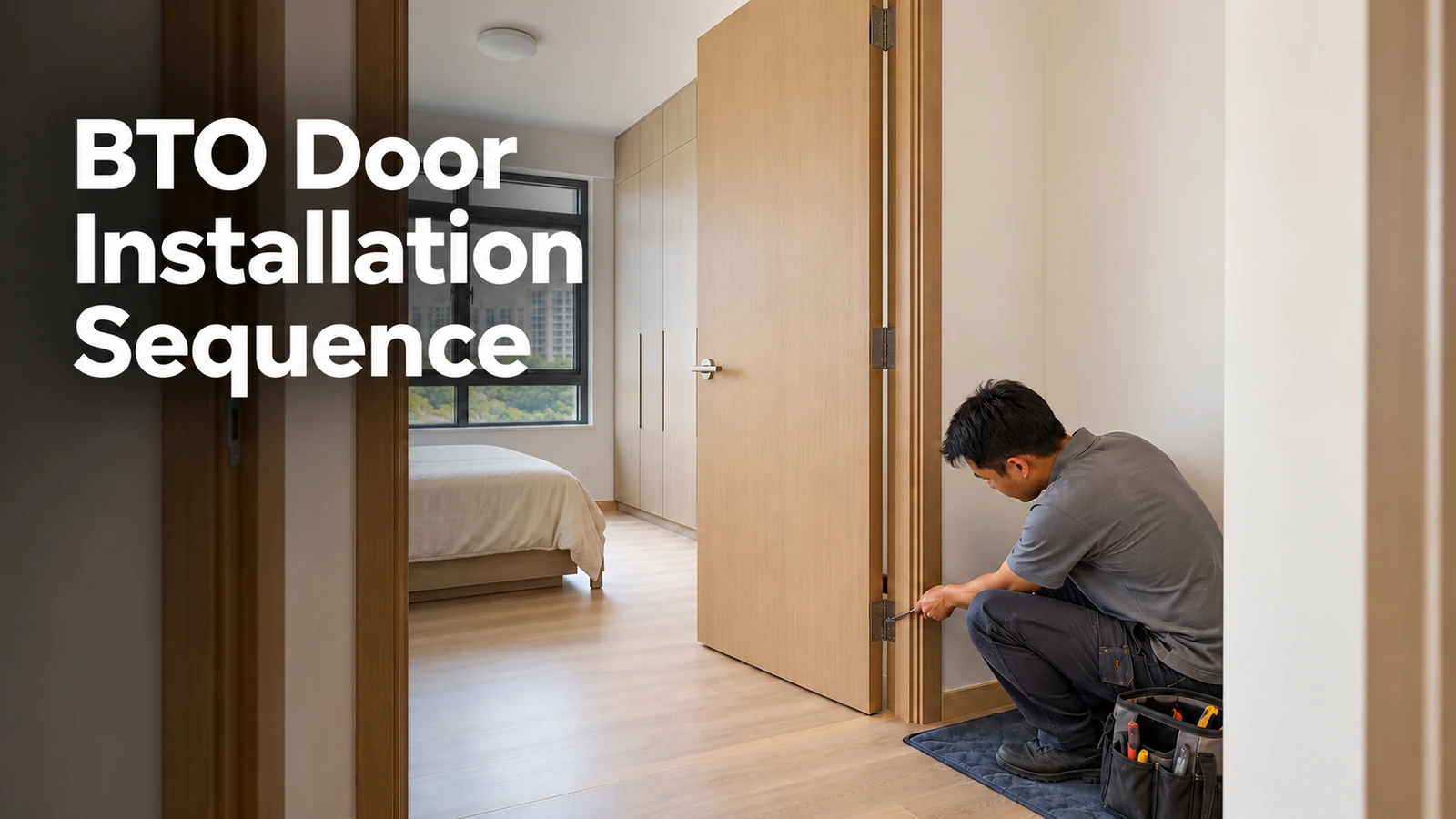
HDB Bedroom Door Replacement and Installation
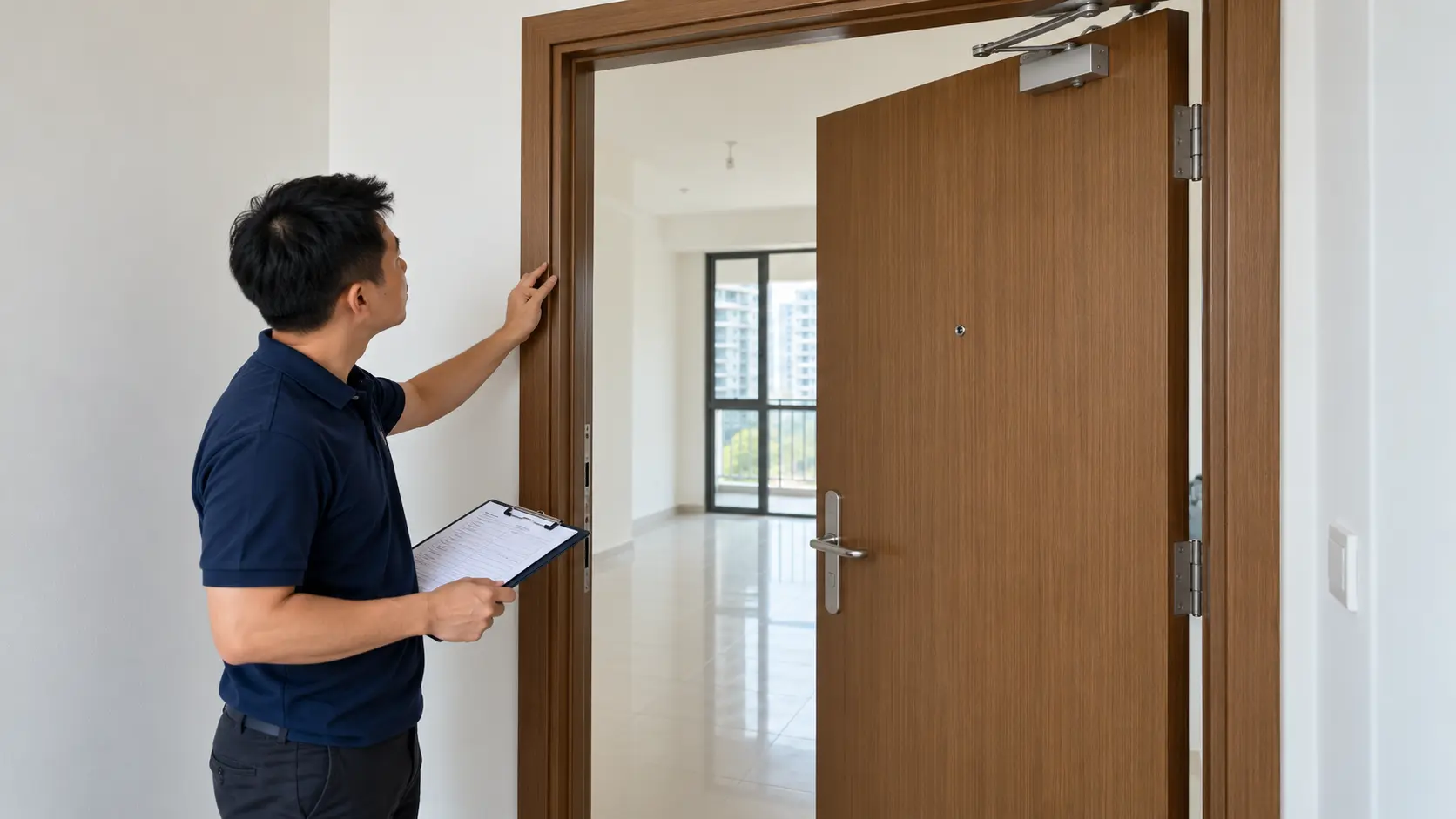
An HDB bedroom door replacement should begin with a site survey after finished floor levels are known. HongRui's guide to common door measurement mistakes explains the difference between rough opening, frame and finished leaf sizes.
Information to record before ordering
- Opening width and height at the top, middle and bottom
- Existing frame material, condition, rebate and depth
- Finished floor level on both sides of the opening
- Door handing and inward or outward swing direction
- Wall space required for a sliding track, if applicable
- Leaf thickness, weight and hinge specification
- Latch, privacy lock, lever handle and strike position
- Any seal, drop seal or ventilation-gap requirement
- Clear passage needed for occupants and furniture
If retaining the frame, inspect it for movement, damaged fixings, swelling and out-of-square geometry. HongRui's comparison of timber and metal door frames covers rebate and hardware compatibility.
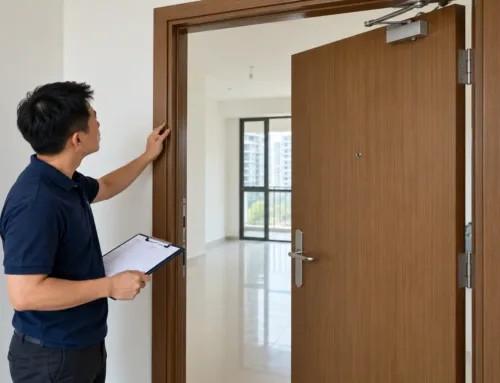
Before handover, open the leaf through its full travel, close and latch it several times, and check the gaps. Drifting, scraping or forceful latching may indicate hinge, frame or floor-clearance issues.

Maintenance and Bedroom Door Inspection
Wipe laminate with a soft damp cloth and a suitable mild cleaner. Avoid soaking timber edges. Periodically check hinge screws, handle movement, latch engagement and gaps. Sliding doors also need a clean track, secure stops and an aligned floor guide. Diagnose rubbing before planing the leaf.
Replacement may be appropriate for severe swelling, delamination, structural damage, failed fixing points or an opening method that conflicts with the room layout. HongRui's guide to common residential door defects helps distinguish adjustment work from replacement-level damage.
Final inspection checklist
- The leaf opens fully without hitting furniture, switches or flooring.
- The door remains aligned and does not swing by itself.
- The latch engages without lifting or pushing the leaf.
- Gaps are consistent and any privacy seals contact correctly.
- Handles, locks, hinges, track stops and guides are secure.
- Laminate edges and exposed timber are sealed and undamaged.
Frequently Asked Questions
What type of bedroom door is suitable for an HDB flat?
A hinged engineered-timber door with a durable laminate finish suits many HDB bedrooms because it balances privacy, maintenance and everyday operation. A hollow-core leaf may be adequate for a quiet guestroom, while a solid-core bedroom door is worth considering where conversational privacy matters. The best choice still depends on frame condition, floor clearance, room layout and the hardware that will be installed.
Do HDB bedroom doors need to be fire-rated?
Standard bedroom doors located inside an HDB dwelling are not automatically fire-rated. Fire-door requirements relate to openings in fire-resisting construction and the building's approved fire-safety strategy. Entrance doors, protected routes and unusual layouts can have different requirements. If the door position or project specification is unclear, verify the approved plan and current requirements with HDB, the appointed contractor or a qualified project professional.
Is a solid-core bedroom door better for privacy?
A solid-core door can support better conversational privacy because its greater mass generally reduces sound transmission compared with a basic hollow-core leaf. However, the complete opening matters: large gaps, a misaligned frame or an unsealed bottom can reduce the benefit. Ask about the actual core construction and, where a measured acoustic target is required, request test evidence for the complete door set.
Is a sliding bedroom door suitable for an HDB flat?
A sliding bedroom door can suit an HDB flat when a swing leaf would clash with a bed, wardrobe or circulation path. A surface-mounted slider needs clear wall space beside the opening, while a pocket door needs a suitable wall cavity and additional coordination. Sliding systems usually leave larger perimeter gaps than hinged doors, so privacy and sound reduction should be evaluated before choosing them.
Can I replace only the bedroom door leaf and keep the frame?
Yes, retaining the frame may be practical when it is square, stable, undamaged and compatible with the new leaf thickness, weight and hardware. The installer should check the rebate, hinge positions, latch location and finished opening before fabrication. A heavier solid-core replacement may need stronger hinges or reinforcement. If the frame is warped, loose or moisture-damaged, replacing the complete set may give a more reliable result.
Does a laminate bedroom door reduce noise?
Laminate is mainly a surface finish, so it does not determine acoustic performance by itself. Noise reduction depends more on the internal core, leaf mass, frame fit, seals and bottom gap. Two laminate doors can look identical but perform differently if one is hollow-core and the other is solid-core. Compare construction details and avoid relying on an acoustic claim unless the supplier can provide relevant test information.
When should an HDB bedroom door be replaced?
Replacement may be appropriate when the leaf has extensive swelling, delamination, impact damage or failed hardware reinforcement, or when the frame and opening no longer allow proper alignment. It may also be justified when the door's swing seriously limits the revised room layout. Minor rubbing, loose hinges or latch misalignment may only need adjustment, so inspect the cause before ordering a new set.
What should be measured before ordering a BTO room door?
Measure the finished opening width and height at several points, along with frame depth, rebate, floor levels and clear passage. Record the handing, swing direction, leaf thickness, hinge and lock positions, and any wall travel needed for a sliding system. Final measurements should reflect completed or confirmed floor finishes. For a heavier or custom leaf, have the supplier or installer verify the opening before fabrication.
Conclusion
The right HDB bedroom door Singapore homeowners select should match the room's privacy needs, sound environment and available space. Laminate is a practical finish, while the core affects weight and acoustic potential. Hinged doors usually seal better; sliding doors help where swing clearance is limited. Measurement, hardware, frame condition and installation determine long-term performance.
Project-specific conditions should be confirmed before modifying an opening or wall. Homeowners and project teams can review HongRui's timber door manufacturing and project support information to compare suitable constructions, finishes and installation considerations for internal residential doors.

Leave A Comment