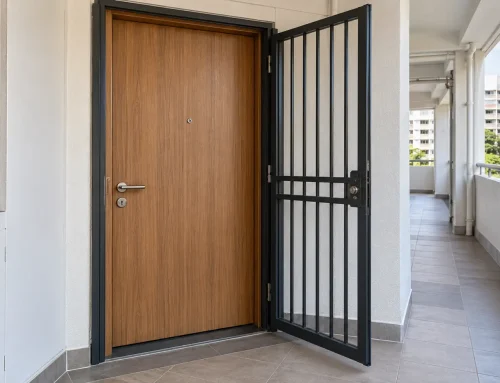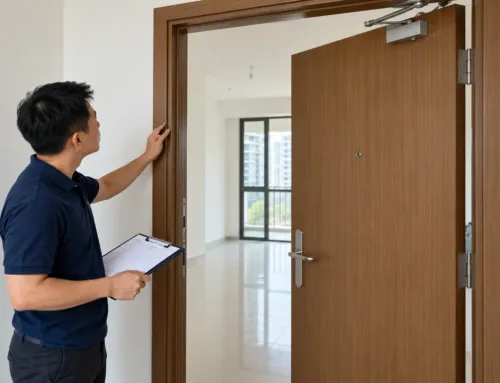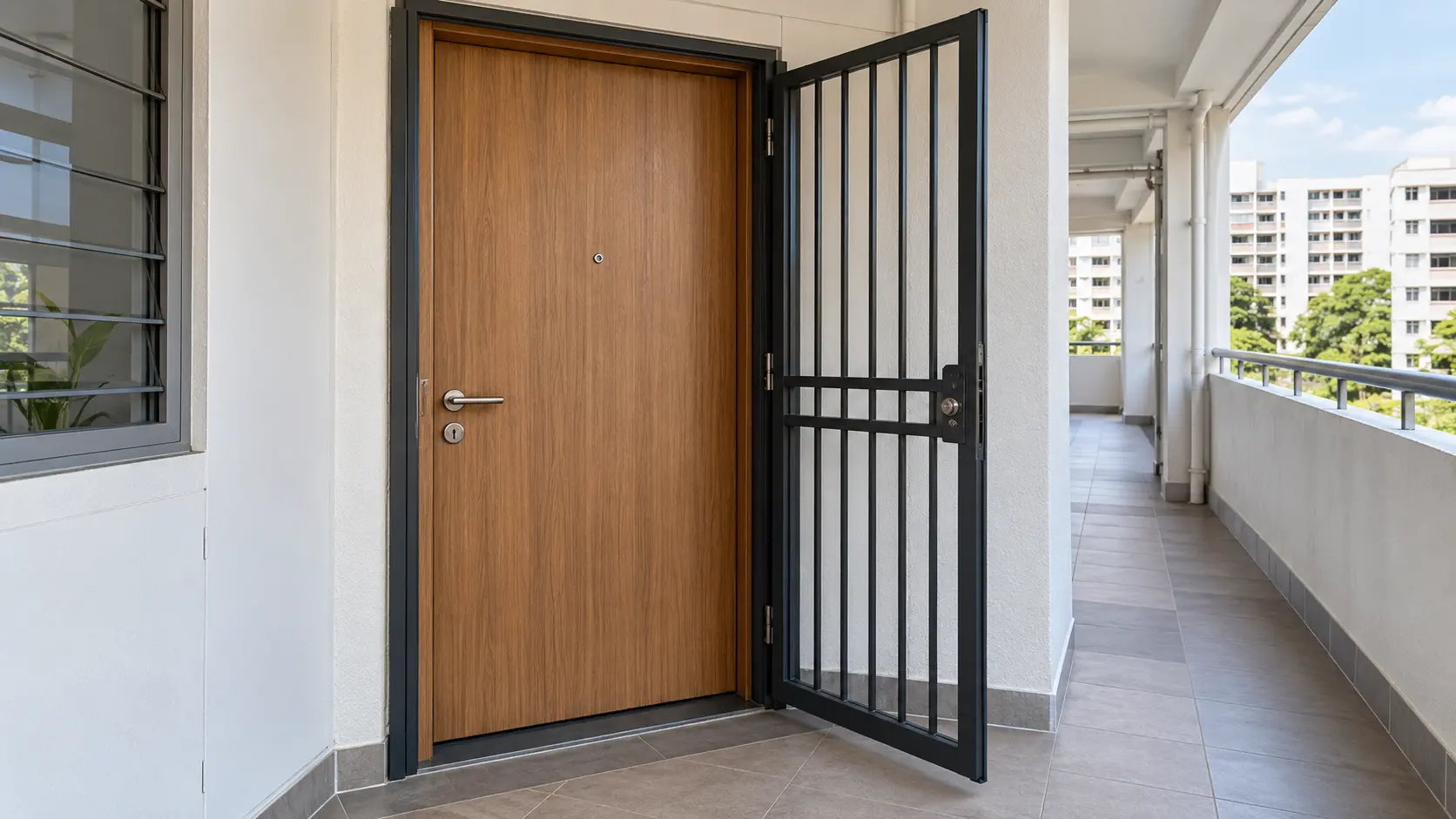
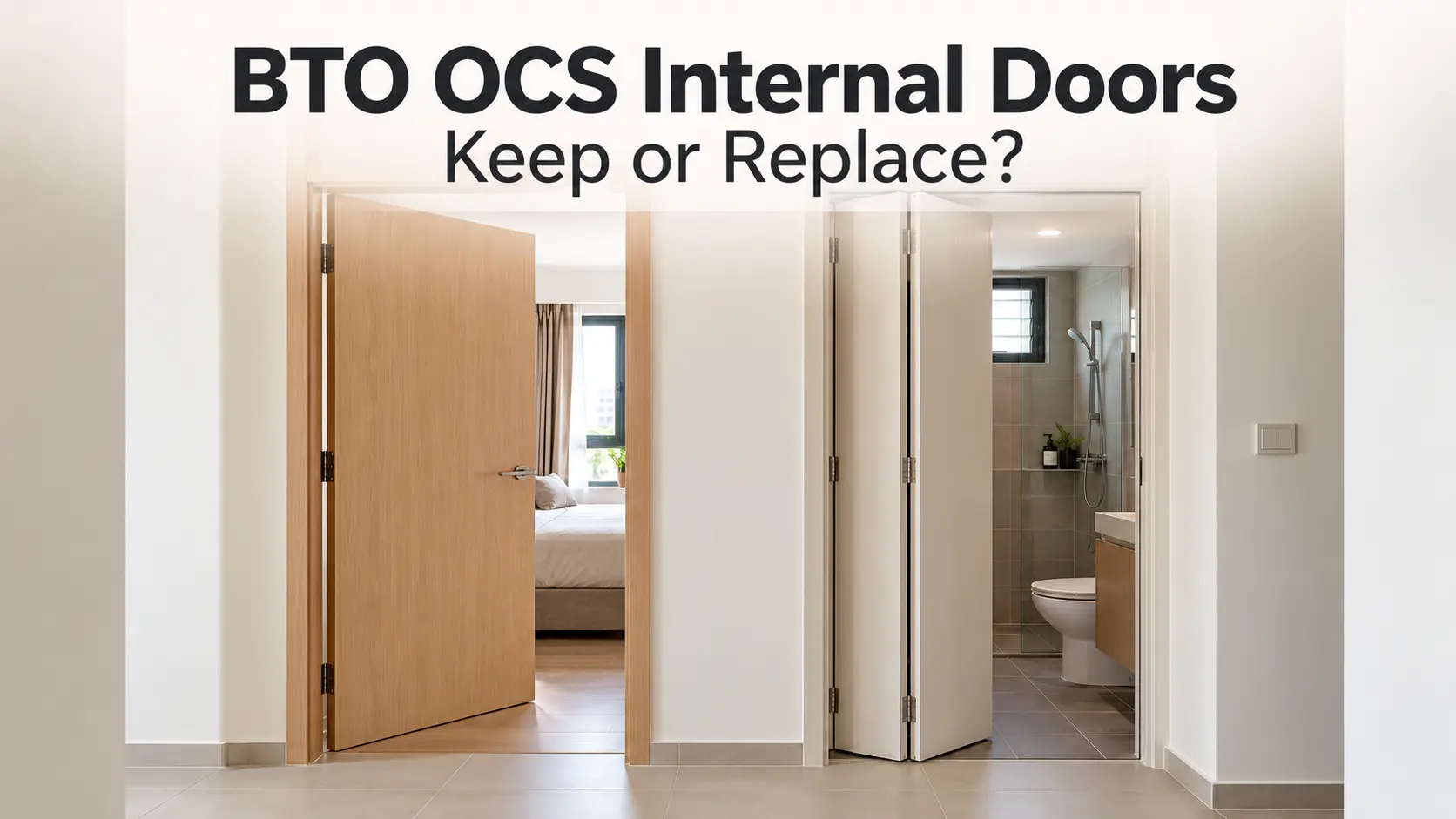
BTO OCS internal doors are the bedroom and bathroom doors HDB installs when a buyer opts in to the Optional Component Scheme (OCS) at flat booking. That creates two decisions: whether to opt in, and later, whether to keep what was installed. This guide explains what the package covers, which projects offer it and how to decide room by room, for BTO owners, interior designers, contractors and project consultants.
What are BTO OCS internal doors?
BTO OCS internal doors are the bedroom and bathroom doors offered under HDB’s Optional Component Scheme for new Build-To-Order flats. HDB describes OCS as an opt-in scheme that brings a home closer to move-in condition at key collection, with the cost added to the flat price. Items must be chosen at booking; see HDB’s booking page.
What the package includes
For 3-room and larger flats, doors come bundled with sanitary fittings. Recent launches listed:
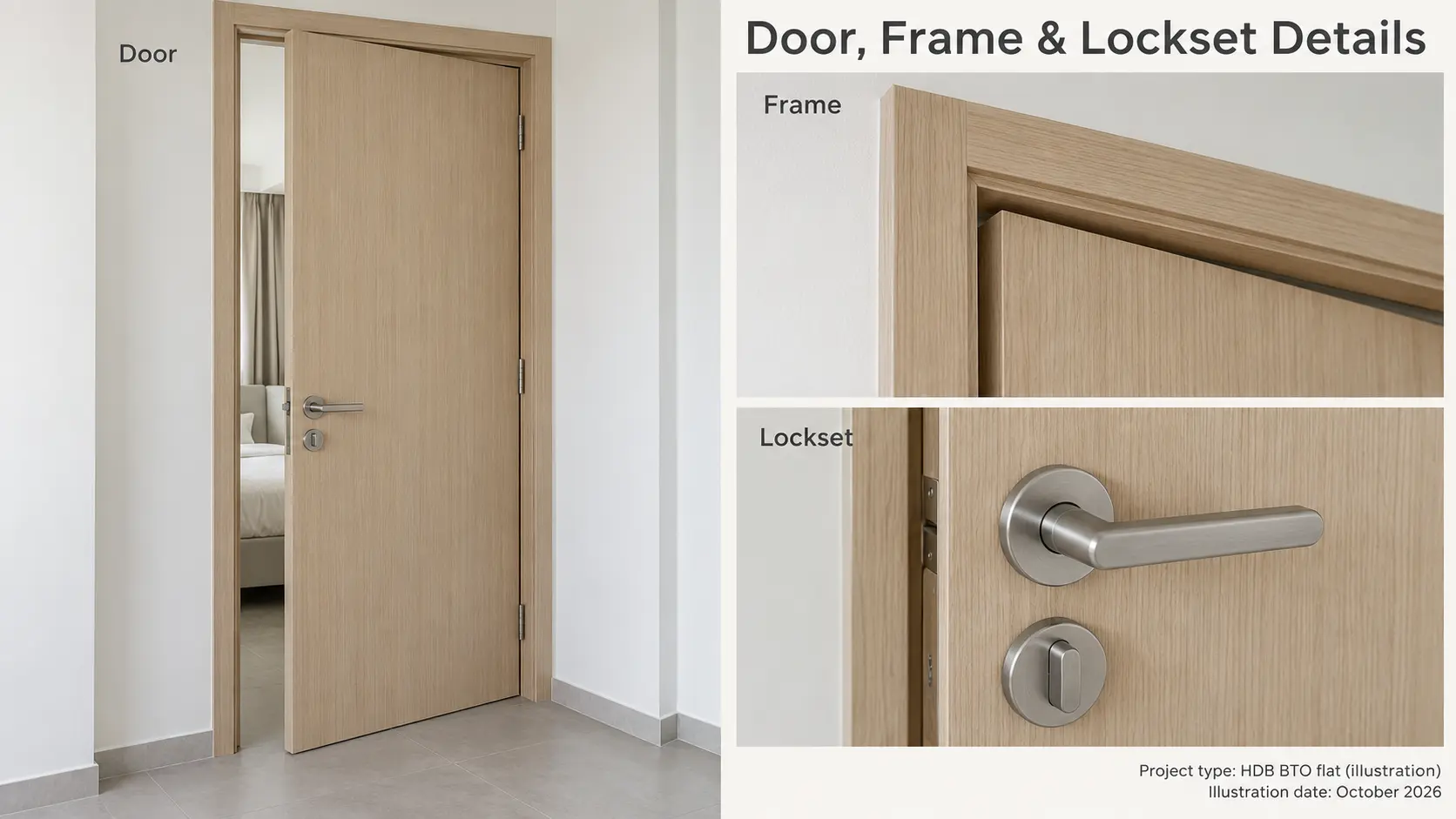
- Laminated UPVC bedroom doors: two in a 3-room flat, three in a 4-room flat.
- Two laminated UPVC bathroom doors, described as folding doors in several launches.
- A laminated UPVC frame at every bedroom and bathroom/WC opening.
- A wash basin with tap mixer and a shower set with bath/shower mixer.
Prices are set per project. Launch material reported for June 2026 listed S$2,810 (3-room) and S$3,240 (4-room) at specific projects, so use your own project’s OCS leaflet.
What it does not include
HDB lists the entrance door and metal gate, household shelter door and service yard door as general specifications, not OCS items. The shelter door must not be hacked, drilled, altered or removed. An entrance upgrade is a separate decision; see metal gate options for HDB entrances.
Which BTO projects offer OCS internal doors?
Only some do. HDB’s February 2026 sales brochure for a shorter waiting-time project lists bedroom and bathroom doors among standard finishes and limits OCS to senior-friendly items for short-lease 2-room Flexi flats. Check your own project’s brochure.
How internal doors are supplied in different BTO situations
| Project situation | Internal doors | What it means |
|---|---|---|
| Longer waiting-time BTO, such as Plus and Prime projects in the June 2026 launch | OCS opt-in package | Opt in at booking; decide later whether to keep. |
| Shorter waiting-time BTO | Provided as standard | Keep-or-replace decision only. |
| PPVC projects | Pre-installed, per property guides | No opt-out; confirm in the brochure. |
| White flats (no bedroom walls) | OCS covered bathroom doors only in June 2026 | Bedroom doors depend on later wall works. |
Materials and construction: what “laminated UPVC” tells you
UPVC is unplasticised polyvinyl chloride, a rigid plastic that does not absorb water as untreated timber can. A laminate layer provides the finish. HDB’s brochures name the material but not the core construction, thickness, hardware grade or warranty, so confirm these in the OCS leaflet.
Common internal door options for BTO and similar flats
| Option | Tends to suit | Limitations to weigh |
|---|---|---|
| Laminated UPVC (OCS baseline) | Bedrooms and bathrooms needing low upkeep | Finish and profile follow the HDB specification. |
| Laminate-faced timber, non-fire-rated | Bedrooms and study rooms | Keep away from constant splashing. |
| Aluminium toilet door | Bathrooms needing ventilation or light | Privacy and sound feel differ from a solid leaf. |
| Folding (bi-fold) door | Compact bathrooms | More moving parts to maintain. |
Keep or replace OCS internal doors? A room-by-room guide
Bedroom doors
Keep bedroom doors when the layout is unchanged, the swing clears wardrobes and beds, and the finish suits the interior. Replacement is reasonable for better sound privacy (a home office, say), a sliding arrangement that frees circulation, or a match with new carpentry. Owners can compare non-fire-rated timber doors on finish, thickness and hardware.
Bathroom doors
Bathroom doors work hardest: steam, splashes and daily movement, often on folding tracks and hinges. Keep them if they run smoothly and the room stays dry and ventilated. Consider replacement if the track binds, the opening method needs to change, or ventilation and light matter more than a solid leaf. Aluminium toilet door options with frosted or louvred panels are one route.
A five-question test
- Does the current swing or fold clash with furniture or circulation?
- Is the room’s ventilation, privacy or sound need unmet?
- Does the finish fit the renovation concept?
- Does the baseline lockset or hardware miss a requirement?
- Would replacement trigger a permit item, such as moving the opening or disturbing bathroom finishes?
If every answer is no, keep the door. If one or two are yes, replace only those rooms; every replaced OCS door is a door paid for twice.
HDB rules to check before replacing internal doors
HDB’s renovation guide makes the owner responsible for permits and requires a contractor listed in HDB’s Directory of Renovation Contractors. For doors, it states:
- Relocating a door within the flat needs a permit, and new openings must not cut through reinforced concrete walls.
- Replacing a main door facing a staircase or lift lobby needs a permit; the door and frame must be half-hour fire-rated with a door closer.
- In newly built BTO flats, bathroom wall and floor finishes cannot be removed for three years.
- The household shelter door must stay intact and working.
Requirement, specification or recommendation?
| Type | Example here | Where to confirm |
|---|---|---|
| HDB requirement | Permit to relocate an internal door | HDB renovation guidelines and e-services |
| Project specification | Laminated UPVC doors and frames | Project brochure and OCS leaflet |
| Manufacturer recommendation | Hardware limits, care instructions | Supplier documents |
| General guidance | Maintenance routine, installation sequence | Contractor or interior designer |
Main-door rules are a separate topic; see HongRui’s overview of HDB fire-rated main doors.
Measurements, frames and hardware: where replacements go wrong
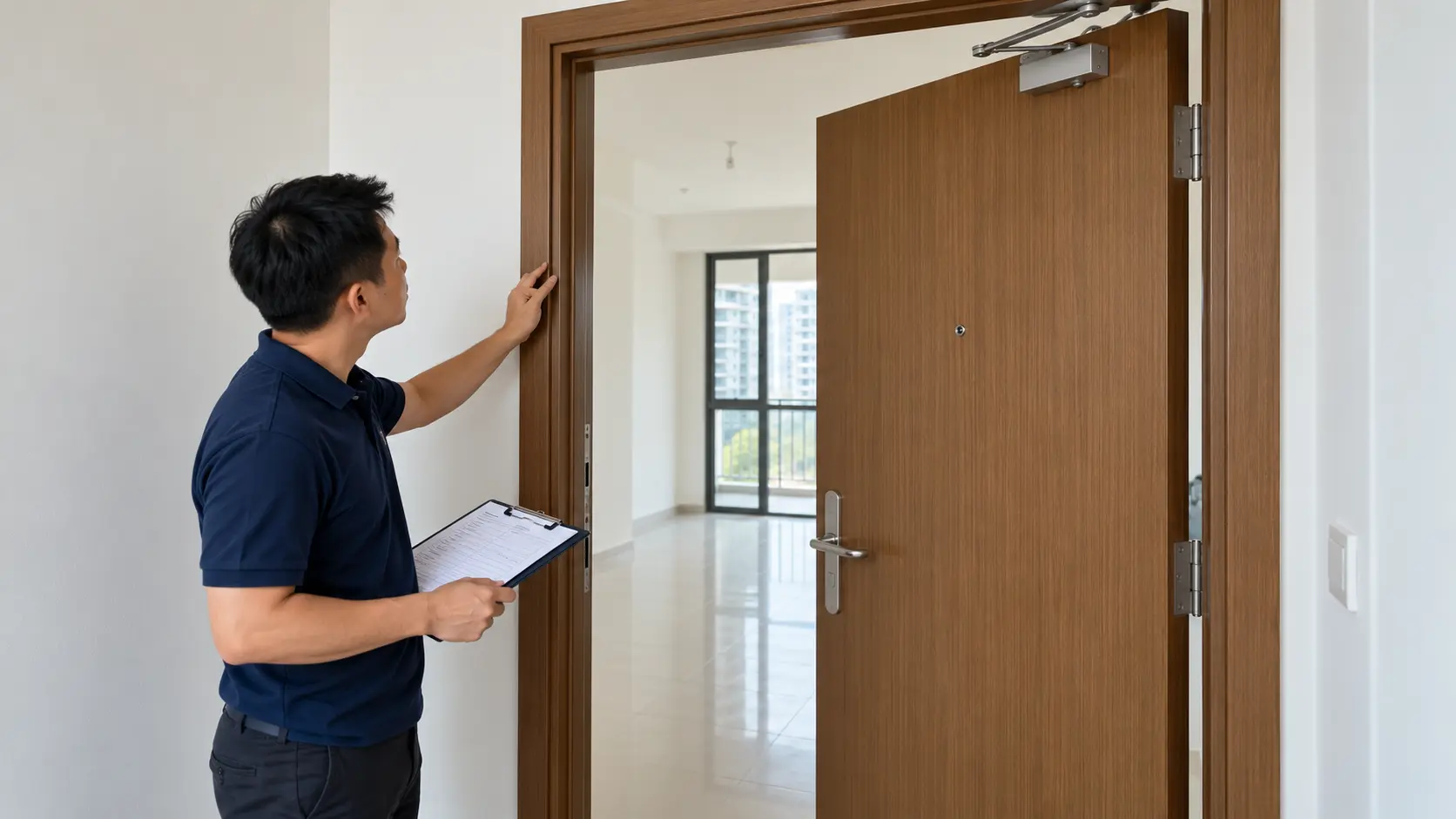
- Measure the as-built opening, not the plan: width and height at several points, frame depth and wall thickness.
- Check the wall type. HDB says drywall partitions separate bedrooms, and specifications also list precast and lightweight concrete partitions, so fixing methods differ.
- Confirm floor level. Bottom clearance depends on the finished floor, and removing floor finishes needs a permit.
- Confirm opening direction and handing, and check the swing arc against wardrobes and switches.
- Settle hardware early, including lock type. For a digital lock on an internal door, check thickness and preparation with the supplier.
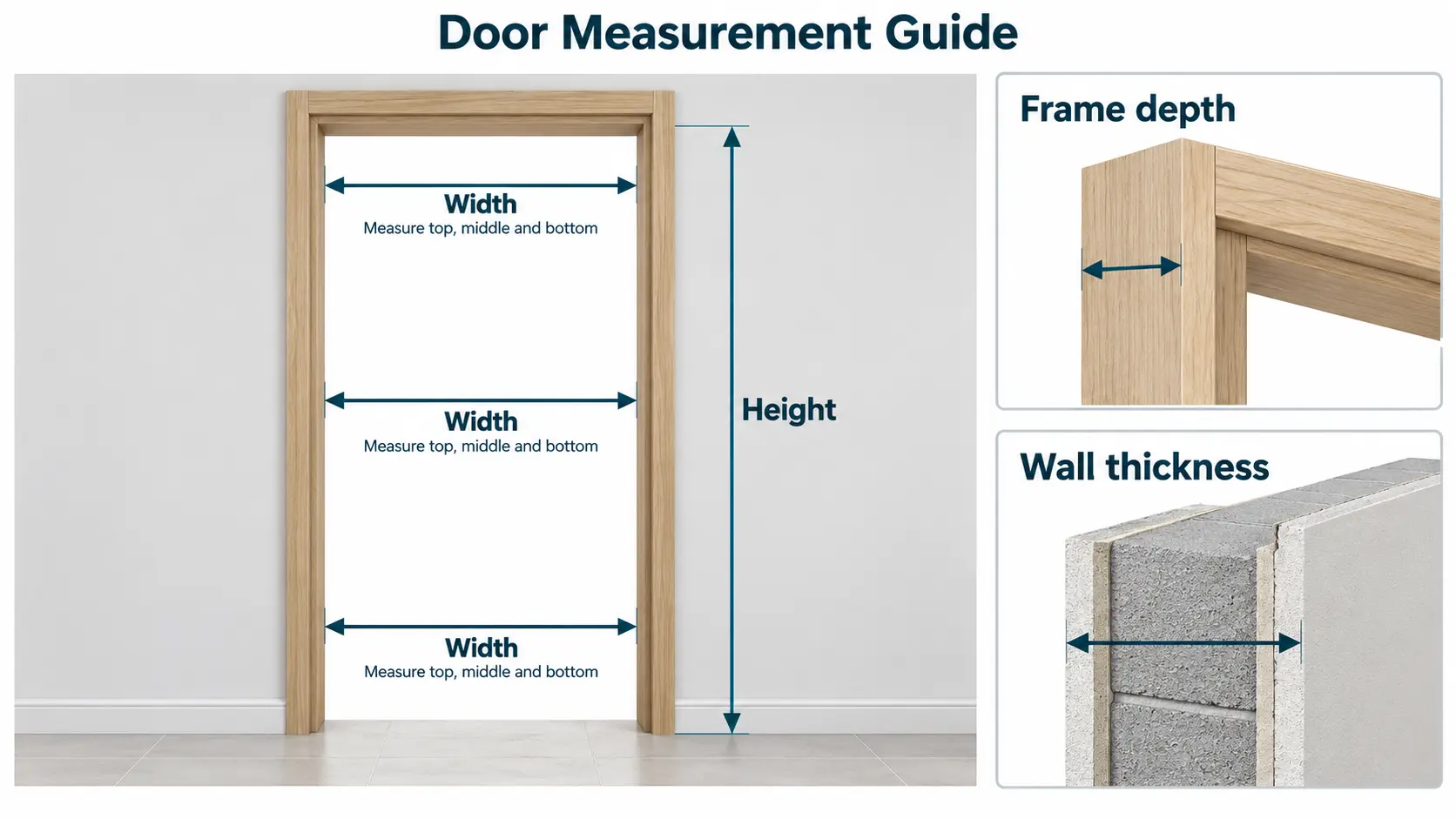
Installation sequence and common mistakes
This is a general site sequence, not an HDB requirement. Adjust it to the project programme.
- Inspect installed doors at key collection and report defects before renovation.
- Confirm permit items with an HDB-registered contractor.
- Protect doors from dust, paint and impact during works.
- Take final measurements once floor and wall works settle.
- Check delivered doors against the approved size, handing, finish and hardware, then install and test.
- Make good surrounding finishes and record the handover condition.
Common mistakes
- Ordering from plan dimensions instead of site measurements.
- Replacing doors before reporting defects, which can blur responsibility.
- Ignoring moisture exposure when choosing a finish.
- Assuming old hardware will fit a new leaf.
Inspection checklist and maintenance guidance
HDB gives new flat owners a one-year Defects Liability Period from key collection, with reported defects repaired through the building contractor, per a Ministry of National Development written answer. Inspect doors early.
- Doors open, close and latch without rubbing, with even gaps.
- Laminate edges and corners are intact, with no peeling or chips.
- Frames are firm, with no cracks or loose sections.
- Folding doors run smoothly on track and hinges.
- Locksets and handles turn and secure properly.
- No staining or soft spots appear near the bottom edge.
General maintenance schedule (not an HDB requirement)
| Task | Suggested frequency |
|---|---|
| Wipe with a damp cloth, then dry, especially bathroom doors | Weekly |
| Check tracks and hinges; clear debris | Monthly |
| Tighten screws and handles; follow supplier lubrication advice | Every six months |
| Check for dust, paint splashes and impact marks | After major renovation |
HDB’s maintenance guidance for timber doors advises avoiding constant splashing, using a shower screen and ventilating the room; the same habits protect any bathroom door. Owners maintain their flats once the Defects Liability Period ends.
When replacement may be needed
- Folding tracks or hinges are damaged beyond adjustment.
- Delamination, peeling or cracking cannot be repaired.
- Frame damage prevents proper alignment.
- A layout change moves the opening, which brings in the permit requirement.
How this applies to resale flats, condominiums and commercial projects
The measuring, frame and hardware logic carries over, but the baseline differs. Resale flats keep the previous owner’s doors, condominium doors follow the developer’s specification, and offices, hotels, hospitals, schools and industrial facilities follow project specifications and approved fire-safety design. For fire-rated internal doors, architects and facility managers should confirm rating, certification and installation against approved plans and the relevant authority.
Questions to ask before you decide or specify
- Does my project brochure list OCS doors or standard doors?
- What are the as-built opening sizes and wall type at each door?
- Will the layout change, and does that need a permit?
- Does the quotation cover frames, making good and removal of the old door?
- What documents or warranty terms come with the new doors?
Frequently asked questions
Are internal doors included in every BTO flat?
No. Bedroom and bathroom doors come as standard in some projects, including shorter waiting-time ones, and as an opt-in package in others. HDB’s sales brochure for your project shows which applies, so read its finishes and fittings page and any OCS leaflet before booking. Property guides also report that PPVC projects arrive with doors already installed.
Can I add OCS internal doors after key collection?
No. HDB states that OCS items cannot be requested after the booking appointment, because the contractor will already have ordered and installed them. If you did not opt in, the doors become part of your own renovation scope. The OCS Option Form from booking shows what you chose, and HDB can assist if it is lost.
Do I need an HDB permit to replace bedroom or bathroom doors?
HDB’s renovation guide lists permits for relocating internal doors and for replacing a main entrance door on a fire escape route. It does not list like-for-like bedroom or bathroom door replacement as a permit item, but requirements can depend on the block and the works involved. Confirm with your HDB-registered contractor or HDB’s project-specific e-service first.
Are OCS bedroom and bathroom doors fire-rated?
HDB’s published specifications describe them as laminated UPVC and do not state a fire rating. The fire-rated requirement HDB publishes applies to replacing a main entrance door on a fire escape route, which needs a half-hour rating and a door closer. Rules can depend on the block and approved fire-safety provisions, so check project documents or ask HDB.
Can I replace only the door and keep the frame?
Sometimes. A new leaf can work with an existing frame if the frame is intact, square and compatible with the leaf’s thickness, hinges and lock preparation. Replacing the frame is more intrusive and may need surrounding finishes made good. Ask the supplier or installer to confirm compatibility on site rather than ordering from plan dimensions.
Is it better to opt in for OCS doors or arrange my own?
It depends on the layout, budget and renovation plan, so there is no single answer. Opting in adds a ready door set to the flat price and removes one task before move-in, while arranging your own gives more control over type, finish and hardware. Compare the OCS leaflet price and specification with written quotations for equivalent doors, frames and installation.
Conclusion
BTO OCS internal doors give owners a laminated UPVC bedroom and bathroom door set, installed before key collection and paid for through the flat price. Only some projects offer them, and opting in happens at booking. Afterwards, keep doors that operate well and suit the layout, and replace those that clash with the design, ventilation or use of the room. Accurate measurements, compatible frames and hardware, and early defect checks matter most for installation and upkeep. Requirements differ by project and block, so confirm permits and specifications with HDB before work starts.
Project teams can review HongRui’s related door and gate information to compare available materials, applications and installation considerations.
References
- HDB: Booking of Flat, including the Optional Component Scheme
- HDB: Sales Launch February 2026 brochure (Sembawang Deck)
- MyNiceHome: How to Renovate Your HDB Flat (updated 24 June 2026)
- MyNiceHome: Roadshows FAQ on OCS opt-in, drywall and door maintenance
- Ministry of National Development: written answer on the Defects Liability Period (6 February 2024)
- Stacked Homes: June 2026 BTO Launch Review (secondary source reproducing HDB OCS listings)
- Qanvast: Should You Opt in to HDB’s OCS? (secondary source on PPVC projects)