
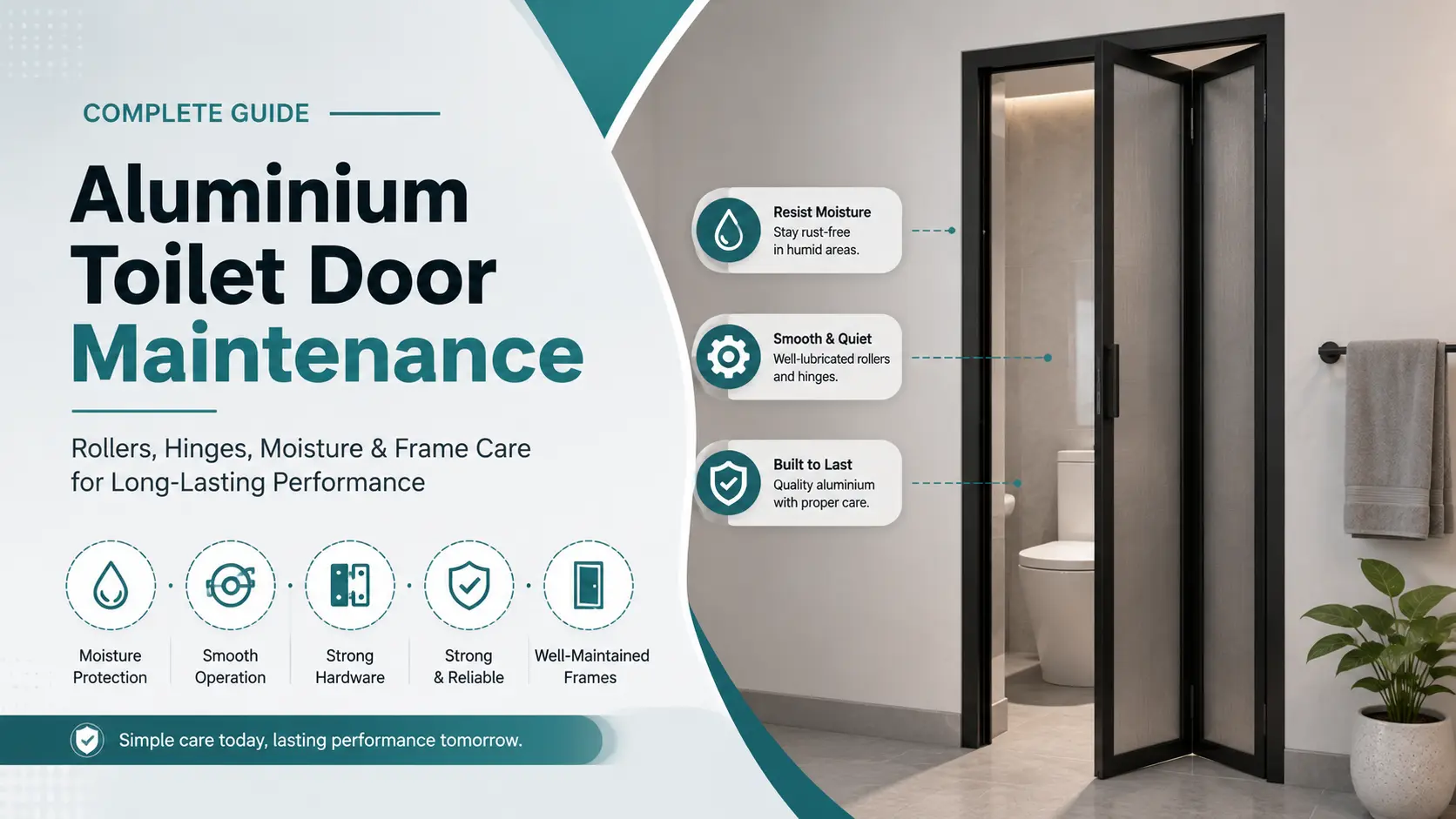
Aluminium Toilet Door Maintenance in Singapore: Rollers, Hinges, Moisture and Frame Care
Article focus: This guide explains how to maintain aluminium toilet doors used in HDB flats, BTO units, condominiums, offices, retail washrooms, hotels, schools and other commercial wet areas. It focuses on practical care for rollers, hinges, moisture exposure, frames, panels, tracks and basic inspection.
Aluminium toilet door maintenance in Singapore is mainly about controlling moisture, keeping rollers and hinges clean, checking frame alignment, and inspecting worn parts before the door becomes difficult or unsafe to use. Because toilets and bathrooms are high-humidity areas, even durable aluminium doors need regular cleaning and hardware checks to perform well over time.
This article is written for homeowners, renovation contractors, interior designers, facility managers and project teams who need a practical maintenance reference for aluminium bathroom doors. It does not replace project-specific installation advice, HDB renovation requirements, manufacturer instructions or professional inspection where damage is serious.
Quick Answer: How Do You Maintain an Aluminium Toilet Door?
Clean the aluminium frame and panels with a mild cleaner, wipe away standing water, keep sliding tracks free of hair and grit, lubricate suitable moving hardware lightly, check hinges or rollers for looseness, and inspect sealant joints around the frame. If the door scrapes, drops, jams or no longer latches properly, arrange a proper inspection before the problem worsens.
Key Takeaways
- Aluminium toilet doors are suitable for wet areas, but rollers, hinges, locks and frame joints still require periodic care.
- Most toilet door problems start from moisture build-up, dirt in the track, loose hardware, poor alignment or worn rollers.
- Sliding and bifold doors need more track and roller maintenance than simple swing doors.
- HDB and BTO bathroom works should be checked against current renovation guidelines when replacement affects surrounding finishes or wet-area works.
- Replacement may be more practical than repair when the frame is distorted, rollers repeatedly fail, panels are damaged, or corrosion affects key hardware.
Why Aluminium Toilet Door Maintenance Matters
Aluminium toilet doors are widely used in Singapore because they perform well in humid bathrooms and washrooms. Compared with untreated timber, aluminium is less likely to swell, warp or absorb moisture. This makes it suitable for HDB toilets, BTO bathrooms, condominium units and commercial washrooms where water exposure is common.
However, the door is not made of aluminium alone. It usually includes rollers, hinges, screws, handles, locks, guide tracks, sealant joints, panel inserts and sometimes bottom guides. These parts can still collect soap residue, hair, dust and mineral deposits from water. Over time, this can lead to noise, dragging, jamming, misalignment or difficulty locking the door.
For project teams, proper maintenance reduces callbacks and helps the door remain usable after handover. For facility managers, it reduces repeated complaints in high-traffic toilets. For homeowners, it helps avoid sudden failure, especially in households with children, elderly users or frequent bathroom use.
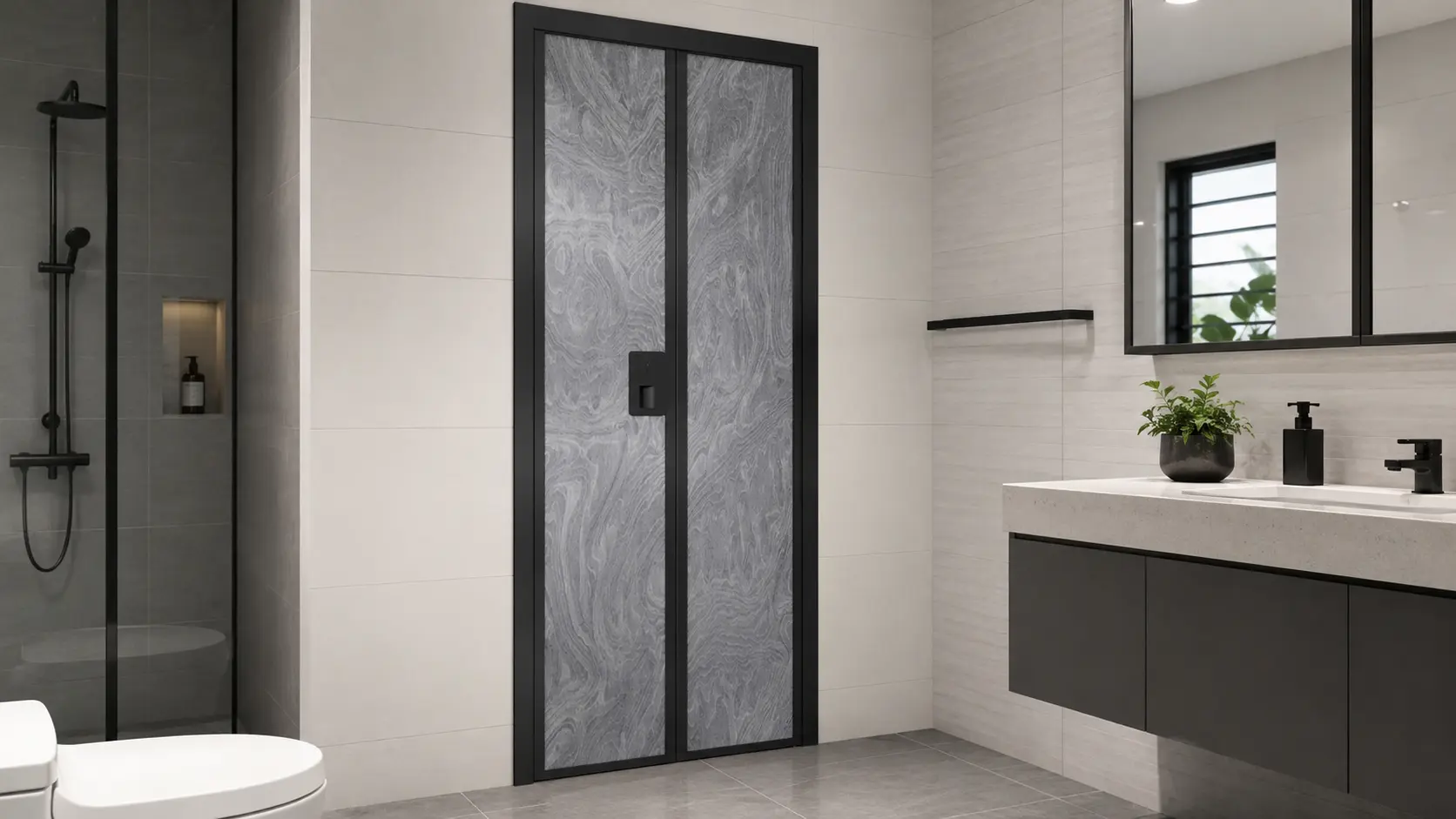
Main Parts of an Aluminium Toilet Door to Maintain
A practical maintenance plan starts by understanding which parts are exposed to wear. The exact parts depend on whether the door is a swing, sliding or bifold configuration.
| Door Component | What It Does | Common Maintenance Issue |
|---|---|---|
| Aluminium frame | Supports the door structure and keeps the opening aligned. | Water stains, loose fixings, sealant gaps or frame movement. |
| Door panel | Provides privacy and forms the main visible door surface. | Soap marks, scratches, impact dents or loose panel edges. |
| Rollers | Allow sliding or bifold panels to move smoothly. | Dirt build-up, flat spots, worn bearings, uneven movement. |
| Track or guide rail | Guides the sliding or folding movement. | Hair, grit, residue, water marks or track obstruction. |
| Hinges or pivots | Allow swing or folding movement. | Loose screws, squeaking, corrosion on non-suitable hardware. |
| Handle and latch | Provides opening, closing and privacy locking. | Loose handle, stiff latch, misaligned strike or worn privacy lock. |
| Sealant joints | Helps close gaps between frame and surrounding wall or tiles. | Cracking, mould growth, separation or water ingress around edges. |
When specifying or replacing toilet doors, project teams can review aluminium toilet door options for Singapore wet areas to compare material, frame and installation considerations.
Aluminium Toilet Door Maintenance Schedule
Maintenance frequency depends on usage. A master bathroom in a small household may need less attention than a school, office, clinic, hotel or commercial washroom used by many people each day.
| Frequency | Maintenance Task | Why It Matters |
|---|---|---|
| Weekly | Wipe frame, handle and panel with a damp cloth and mild cleaner. | Removes soap marks, water stains and light residue before they harden. |
| Weekly | Remove hair, dust and grit from sliding tracks. | Prevents roller obstruction and dragging. |
| Monthly | Check whether the door slides, swings or folds smoothly. | Early stiffness often indicates dirt build-up, roller wear or alignment issues. |
| Monthly | Check handles, hinges, pivots and visible screws for looseness. | Loose hardware can affect safety and door alignment. |
| Every 3–6 months | Inspect sealant joints around the frame. | Cracked or detached sealant can allow moisture to enter surrounding gaps. |
| Every 6–12 months | Arrange inspection for high-traffic commercial washroom doors. | Heavy usage can wear rollers, pivots and locks faster than residential use. |
Maintenance note: Avoid harsh acidic cleaners, abrasive pads and excessive water flushing directly into tracks or frame joints. These can damage finishes, wash dirt deeper into roller cavities, or affect nearby sealant.
Roller and Track Care for Sliding and Bifold Toilet Doors
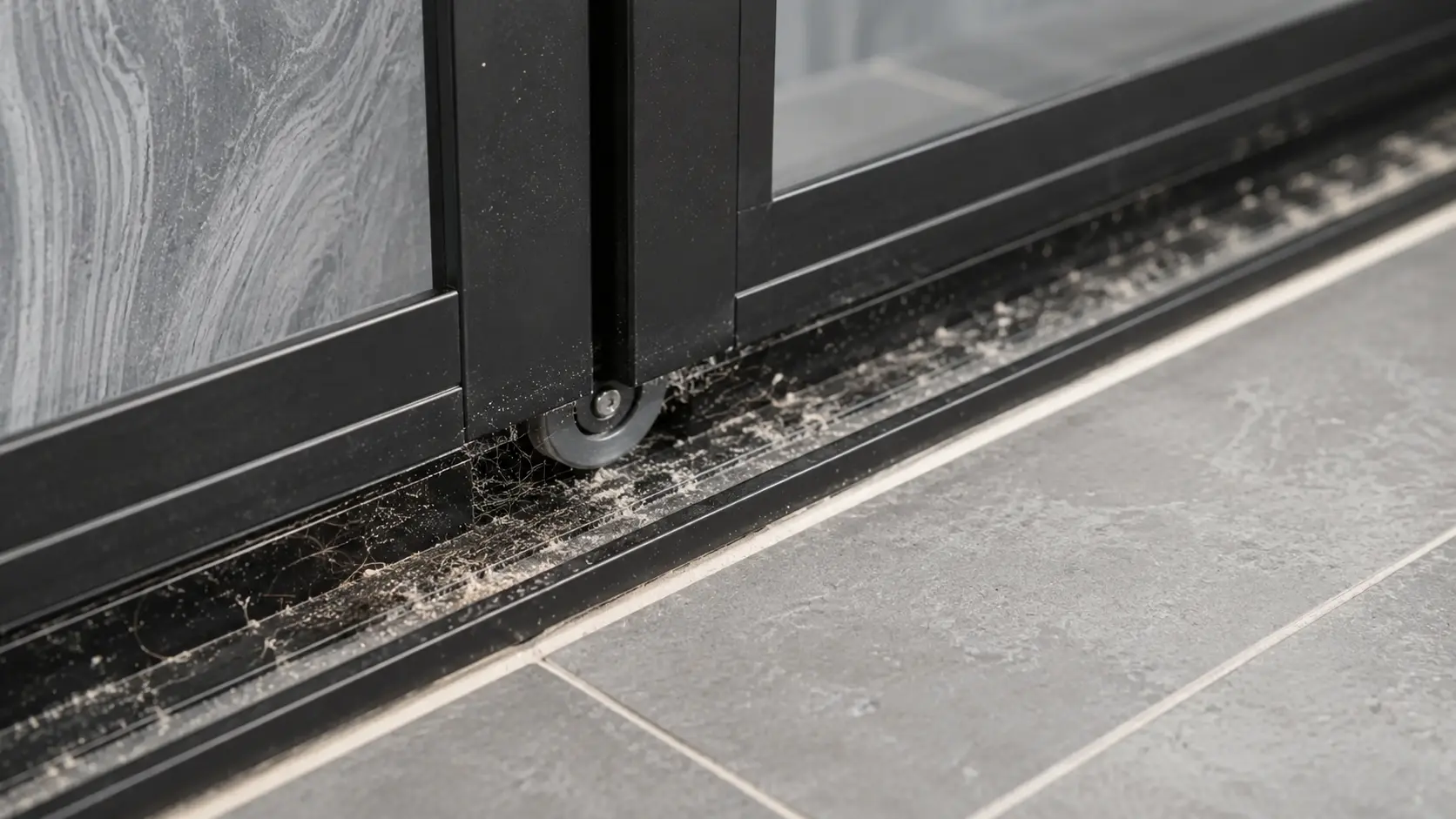
Rollers are one of the most common sources of aluminium toilet door problems. Sliding and bifold doors depend on clean tracks and properly aligned rollers. When the track is blocked, the door may feel heavy, produce noise, move unevenly or stop halfway.
How to Clean Toilet Door Tracks
- Open the door fully so the track is visible.
- Remove loose hair, dust and grit using a soft brush or vacuum nozzle.
- Wipe the track with a damp cloth and mild cleaner.
- Dry the track after cleaning, especially if the bathroom has poor ventilation.
- Move the door slowly to check whether the movement improves.
Do not force a jammed sliding door. Forcing it can damage rollers, bend the guide rail or loosen the frame. If the door repeatedly jumps, scrapes or tilts, the problem may be roller wear, track deformation or incorrect alignment rather than simple dirt.
Signs That Rollers May Be Worn
- The door feels heavy even after cleaning the track.
- The panel tilts or drops on one side.
- The door produces grinding or clicking sounds.
- The door moves smoothly in one direction but jams in the other.
- The bottom guide no longer keeps the panel stable.
For BTO and HDB renovation planning, it is also useful to compare maintenance differences between sliding, swing and bifold systems. HongRui's BTO toilet door size and material guide provides related context on toilet door types and space planning.
Hinge, Handle and Lock Care
Swing aluminium toilet doors use hinges, while bifold systems may use pivots and folding hardware. These parts carry the door weight and keep the panel aligned. If a hinge or pivot loosens, the door may scrape the floor, rub against the frame, or become difficult to latch.
Basic Hinge and Pivot Checks
- Check whether screws are visibly loose or missing.
- Listen for squeaking, clicking or grinding during movement.
- Look for brown staining around screws, which may indicate corrosion on non-suitable components.
- Check whether the gap around the door is even.
- Confirm that the door closes without needing to be lifted or pushed hard.
Use only suitable lubricants recommended for the hardware type. Applying too much oil can attract dust and grime. In many cases, cleaning and a small amount of appropriate lubrication is enough. If screws no longer hold properly, the frame or fixing point may need professional attention.
Handle and Privacy Lock Maintenance
Toilet door handles and privacy locks are touched daily with wet hands. Over time, soap residue and moisture can make the latch stiff or the handle loose. Wipe handles regularly, check whether the lock turns smoothly, and do not slam the door when the latch is misaligned.
If the latch does not enter the strike plate properly, the issue may be door sagging, frame movement or incorrect alignment. Replacing the lock alone may not solve the problem unless the door position is corrected first.
Moisture, Sealant and Frame Care
Moisture is the main reason toilet doors need a different maintenance approach from bedroom or storeroom doors. Aluminium itself is suitable for humid conditions, but water can still affect nearby sealant, screws, panel edges, wall finishes and hardware parts.
Daily Moisture Control
After heavy shower use, leave the bathroom ventilated where possible. Wipe visible water from the lower frame, tracks and handle area. If water regularly pools near the door opening, check whether the bathroom floor gradient, shower screen, kerb or drainage arrangement is causing repeated wetting around the door.
Frame and Sealant Inspection
Sealant around the toilet door frame helps close gaps between the frame and surrounding wall or tiles. Over time, sealant can crack, shrink, stain or detach. This is not only an appearance issue. Gaps around the frame can trap moisture and dirt, especially in bathrooms with frequent shower use.
- Look for cracked or missing sealant along the frame edges.
- Check whether mould forms repeatedly in the same frame corner.
- Inspect whether the frame is still straight and firmly fixed.
- Check whether surrounding tiles or plaster show staining near the frame.
- Do not cover serious water leakage signs with cosmetic sealant only.
Important: If water leakage, tile movement, floor hacking, wall hacking or waterproofing works are involved, this goes beyond normal toilet door maintenance. HDB and BTO bathroom renovation works should be checked against current HDB requirements and handled by suitable renovation professionals where required.
HDB and BTO Toilet Door Maintenance Considerations
In many HDB and BTO flats, the toilet door is located near a tight corridor, vanity area or bedroom entrance. This makes door movement and clearance important. A poorly maintained sliding, swing or bifold toilet door can affect daily movement, especially in compact flats.
For simple maintenance, such as cleaning tracks, wiping frames and checking handles, homeowners can usually manage the work carefully. However, replacement or renovation work may involve surrounding tiles, wall finishes, waterproofing considerations or contractor coordination. HDB publishes renovation guidance for building works, including door and gate replacement guidance and bathroom/toilet renovation considerations. Always check the latest HDB information when works go beyond basic maintenance.
Common HDB and BTO Maintenance Issues
- Sliding toilet door track clogged by hair and dust.
- Bifold door panels folding unevenly due to worn pivot hardware.
- Swing door scraping because hinge screws have loosened.
- Frame sealant staining due to repeated wetting near the shower area.
- Latch misalignment after long-term use or minor frame movement.
For homeowners and renovation contractors comparing replacement choices, HongRui's aluminium toilet door buyer guide for HDB and BTO projects explains product selection considerations. This maintenance article is intended to support that guide, not duplicate its buying intent.
Commercial and Facility Management Considerations
Commercial washrooms experience heavier usage than residential bathrooms. Offices, retail units, hotels, schools, hospitals, clinics, industrial facilities and institutional buildings may have multiple users each hour. This increases wear on rollers, hinges, privacy locks and handles.
For facility managers, aluminium toilet door maintenance should be included in routine washroom inspection. A door that jams or does not lock properly can create user complaints, privacy concerns and operational disruption. In high-traffic environments, waiting for full failure is usually more costly than scheduled maintenance.
Recommended Commercial Inspection Points
- Check if every cubicle or washroom door closes and locks correctly.
- Inspect handles for looseness, sharp edges or missing screws.
- Check hinges, pivots and rollers for noise or excessive play.
- Look for water stains around lower frames and wall junctions.
- Record repeated faults by location to identify installation or usage patterns.
- Replace worn hardware before doors become unsafe or unusable.
For larger developments or commercial washroom programmes, teams may also review HongRui's door manufacturing and project support services to coordinate product type, quantity, installation sequencing and maintenance considerations.
Common Aluminium Toilet Door Problems and Likely Causes
Many toilet door problems can be diagnosed by observing how the door moves, sounds and closes. The table below provides general guidance. It is not a substitute for professional assessment where the door is damaged, unsafe or repeatedly failing.
| Problem | Likely Cause | Suggested Action |
|---|---|---|
| Sliding door feels heavy | Dirty track, worn rollers or poor alignment. | Clean track first. If issue remains, inspect rollers and guides. |
| Door makes grinding noise | Grit in track, damaged roller or metal rubbing against guide. | Stop forcing the door. Clean and inspect moving parts. |
| Swing door scrapes floor | Loose hinge, door sagging or frame movement. | Check hinge screws and alignment. Arrange inspection if sagging continues. |
| Door cannot latch | Misaligned strike plate, loose handle or frame shift. | Check whether the door sits evenly before replacing the latch. |
| Frame edge has mould or staining | Repeated moisture exposure, poor ventilation or failed sealant. | Clean, dry and inspect sealant. Investigate water source if staining returns. |
| Bifold door folds unevenly | Worn pivot, loose guide, uneven track or panel misalignment. | Inspect pivot points and guides. Replace worn components where needed. |
When Replacement May Be Better Than Repair
Not every toilet door issue requires full replacement. Loose handles, dirty tracks or minor hinge noise can often be resolved through maintenance. However, replacement may be more practical when the door has multiple recurring issues or when the existing system no longer fits the bathroom layout.
Consider Replacement When:
- The frame is bent, distorted or no longer securely fixed.
- Rollers fail repeatedly even after cleaning and adjustment.
- Panel damage affects privacy, movement or safety.
- The door type is unsuitable for the available clearance.
- Hardware corrosion is widespread across hinges, pivots, screws and locks.
- Bathroom renovation works are already planned and door coordination can be done together.
Replacement decisions should consider door type, opening size, frame condition, wall and tile condition, bathroom layout, user needs and project budget. A sliding or bifold door may help where corridor space is limited, while a swing door may be simpler to maintain where sufficient clearance is available.
Aluminium Toilet Door Inspection Checklist
Use this checklist during regular home maintenance, project handover, defect checks or facility inspections.
Movement and Alignment
- Door opens and closes smoothly without scraping.
- Sliding or bifold panel does not jump out of the track.
- Door gaps are even and not visibly distorted.
- Door does not need excessive force to close.
Rollers, Tracks and Guides
- Track is free from hair, grit, soap residue and loose objects.
- Rollers move quietly without grinding.
- Bottom guide or top guide holds the panel correctly.
- No visible bending or cracking at guide points.
Hinges, Pivots and Hardware
- Hinges or pivots are secure.
- Handle is not loose.
- Privacy lock works without forcing.
- No sharp edges, missing screws or unsafe protrusions.
Moisture and Frame Condition
- Frame is clean and dry after normal use.
- Sealant is not cracked, detached or mouldy.
- No recurring water stain appears around the frame.
- Surrounding tiles and wall finishes appear stable.
FAQs About Aluminium Toilet Door Maintenance in Singapore
How often should I maintain an aluminium toilet door?
You should clean visible surfaces and tracks weekly, then check hardware and alignment monthly. High-traffic commercial washrooms may need more frequent checks. The main goal is to remove dirt, hair, soap residue and moisture before they affect rollers, hinges, locks or sealant joints.
Why is my sliding toilet door difficult to move?
A sliding toilet door is usually difficult to move because the track is dirty, the rollers are worn, or the panel is misaligned. Start by cleaning the track thoroughly. If the door still feels heavy, noisy or uneven, the rollers or guide system may need adjustment or replacement.
Can aluminium toilet doors rust?
Aluminium itself has good resistance to moisture, but some screws, hinges, pivots, rollers or locks may corrode if unsuitable materials are used or if moisture is trapped. Brown staining around hardware usually comes from non-aluminium components, surface contamination or nearby metal parts, not necessarily the aluminium frame itself.
What cleaner should I use on an aluminium toilet door?
Use a soft cloth with mild soap or a gentle household cleaner. Avoid harsh acidic cleaners, abrasive pads, strong solvents or metal scrapers, as these may damage the finish, scratch panels or affect sealant. After cleaning, wipe the frame and track dry to reduce residue build-up.
Should I lubricate toilet door rollers and hinges?
Light lubrication may help some hinges, pivots and roller systems, but it should be suitable for the hardware type. Too much oil can attract dirt and make tracks worse. Always clean the track first. If the door remains noisy or stiff after cleaning, check whether parts are worn.
When should I replace my aluminium toilet door instead of repairing it?
Replacement may be better when the frame is bent, the door repeatedly jams, the panel is damaged, rollers keep failing, or the door type no longer suits the bathroom layout. If bathroom renovation is already planned, it is often more efficient to coordinate toilet door replacement during the same project.
Do HDB toilet door replacement works need special checking?
Basic cleaning and minor maintenance are different from renovation or replacement works. If the job affects surrounding tiles, wall finishes, waterproofing, door frame installation or other bathroom works, check current HDB renovation guidance and use suitable renovation professionals where required.
Are sliding or bifold aluminium toilet doors harder to maintain?
Sliding and bifold aluminium toilet doors usually need more maintenance than simple swing doors because they have rollers, tracks, pivots or guide systems. They are useful for space-saving layouts, but tracks must be kept clean and moving parts should be inspected regularly to prevent jamming.
Conclusion
In short, keep tracks clean, hardware secure and moisture under control, and most aluminium toilet doors will run smoothly for years. Watch for the early warning signs covered above — dragging, grinding, sagging or a latch that no longer sits right — and address them before they turn into a full replacement job.
For HDB, BTO, condominium and commercial washroom projects, maintenance should be planned according to usage level, bathroom layout and surrounding finishes. Simple cleaning can prevent many problems, while repeated jamming, sagging, staining or hardware failure should be checked before the door becomes unsafe or difficult to use.
Project teams and property owners can review HongRui's aluminium toilet door information to compare available wet-area door materials, applications and installation considerations.
References
Regulations and technical information last checked: July 2026. Always verify current HDB or project-specific requirements before carrying out renovation or replacement works.
Leave A Comment