

Common Door Defects in Singapore Homes: Warping, Sagging, Gaps, Rust and Misalignment
Common door defects in Singapore homes — warping, sagging, gaps, rust and misalignment — are usually caused by humidity, hinge wear, poor installation or ageing hardware rather than faulty materials alone. Most cosmetic defects can be adjusted or repaired, but gaps or misalignment on a fire-rated main door may affect its fire performance and should be assessed by a qualified door contractor rather than DIY-adjusted.
A door that used to close smoothly and now scrapes the floor, won't latch, or has developed a visible gap is one of the most common complaints from HDB, BTO, condominium and landed homeowners in Singapore. Contractors, interior designers and facility managers encounter the same five defects repeatedly — warping, sagging, gaps, rust and misalignment — across timber, metal, aluminium and laminate doors. This guide explains what causes each defect, how to tell a cosmetic issue from a fire-safety one, and when repair, adjustment or replacement is the more sensible path.
Key Takeaways
- Singapore's year-round humidity and heat are the leading contributors to warping, swelling and hardware corrosion in residential doors.
- Sagging is most often a hinge or frame problem, not a defective door leaf.
- Gaps around a fire-rated main door are a functional issue, not only a cosmetic one, because they can affect the door's fire-resistance performance.
- Rust typically starts at hardware and fixings before it reaches the door leaf itself, so hinges and hardware deserve regular attention.
- Not every defect needs a full door replacement — many are correctable through adjustment, re-hanging or hardware servicing.
What Counts as a Door Defect?
A door defect is any change from the door's original manufactured condition that affects how it looks, closes, seals or performs. Defects range from purely cosmetic (a hairline crack in a laminate finish) to functional (a door that no longer latches) to safety-relevant (a fire-rated main door with a gap or seal problem). Which category a defect falls into is the first step in deciding whether the fix is a homeowner adjustment, a contractor repair, or a full replacement.
Why Singapore's Climate Accelerates Door Defects
Singapore's combination of high year-round humidity, heavy rainfall and intense heat puts more stress on doors than in drier climates. Timber and timber-composite doors absorb and release moisture as humidity fluctuates, causing the leaf to expand and contract slightly over time. Metal hardware exposed to moist air or monsoon rain at exposed corridors corrodes faster than in a controlled indoor environment. Units at higher floors, corner units exposed to wind-driven rain, and doors near bathrooms or semi-outdoor yards are generally more exposed to these conditions than sheltered interior doors.
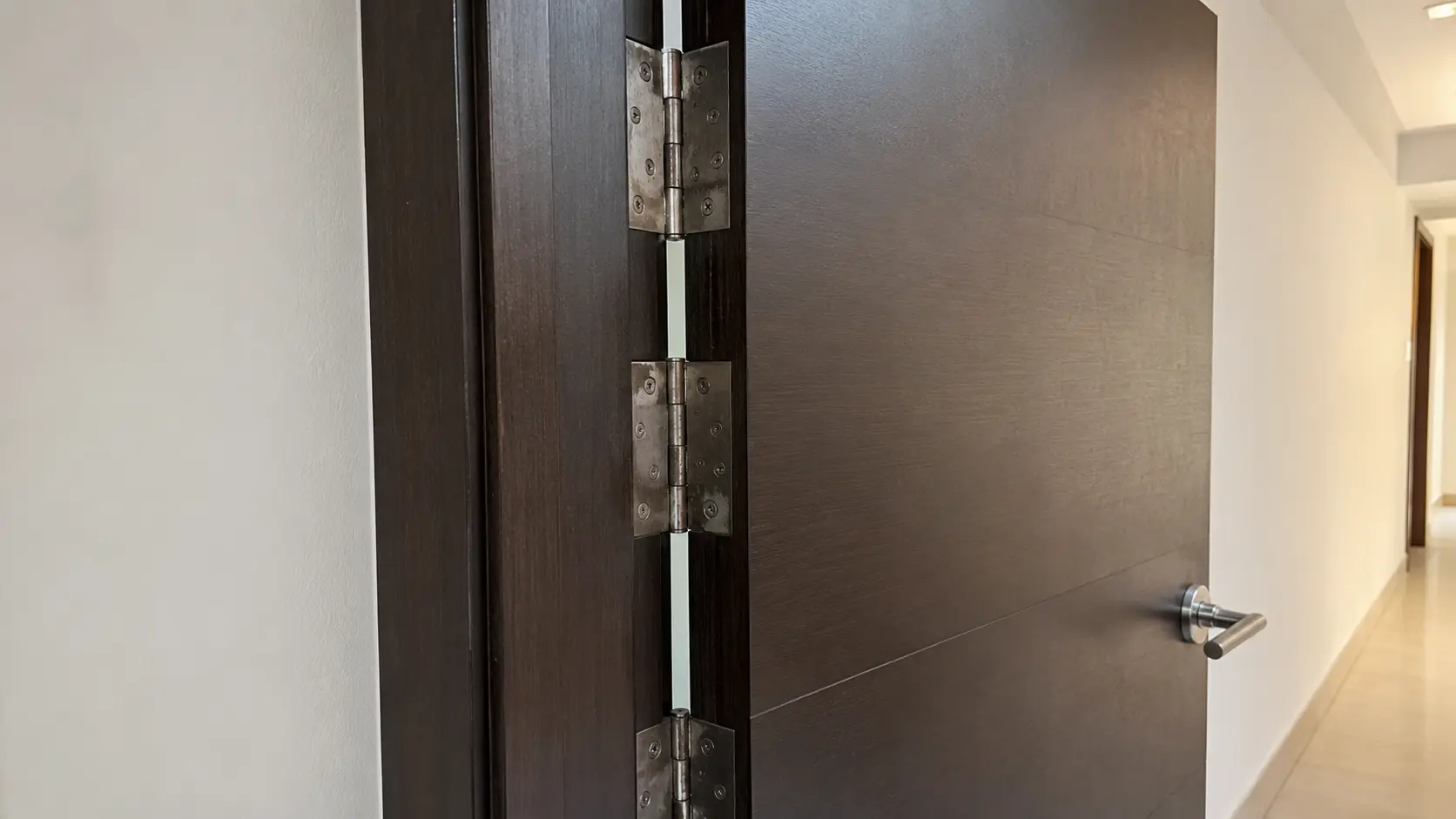
Warping
Warping is when a door leaf bends, bows or twists out of its original flat plane, most commonly along its height. It is one of the most visible defects because the door visibly no longer sits flush against the frame or door stop.
Common Causes
- Uneven moisture exposure — one face absorbs more humidity than the other, causing uneven expansion.
- Poor-quality core material or inadequate edge sealing at manufacture.
- Direct sun exposure on one face, particularly for doors facing an open corridor or balcony.
- Installation without proper acclimatisation to ambient humidity before fitting.
Signs and What Can Be Done
A warped door typically shows a visible curve along its edge, uneven gaps at the top versus the bottom, or contact with the frame at only one point when closed. Minor warping can sometimes be corrected through controlled reconditioning, though results are not always permanent. Significant warping, especially on a fire-rated door, usually points toward replacement, since a warped leaf may no longer seal correctly against its frame. Aluminium and properly specified metal doors are inherently more dimensionally stable than timber in humid conditions — a relevant consideration when specifying a replacement for a wet or exposed area. See HongRui's Aluminium Toilet Door Singapore guide for this comparison.
Sagging
A sagging door drops slightly on its latch side, causing it to scrape the floor, catch on the frame, or leave a visible diagonal gap between the door and the frame head.
Common Causes
- Worn, loose or corroded hinges that can no longer support the door's full weight.
- Screws loosened in the frame over years of daily use.
- A heavy solid-core or fire-rated leaf installed with hardware undersized for its weight.
- Frame movement, where the surrounding wall or frame has shifted slightly over time.
What Can Be Done
Sagging is frequently a hardware problem rather than a door problem. Tightening or replacing hinge screws, fitting longer screws into solid timber behind the frame, or replacing worn hinges resolves many cases without touching the door leaf. Where sagging has caused prolonged rubbing against the floor or frame, the door edge may also need re-planing once the hinge issue is corrected.
Gaps
A gap is any space between the door leaf and the frame, threshold or door stop that should not be there when the door is closed. Gaps are sometimes dismissed as purely cosmetic, but on a fire-rated main door, the gap tolerance is part of what allows the door assembly to perform as tested.
Common Causes
- Sagging or warping, which pulls the door leaf away from the frame at specific points.
- Frame movement or an improperly installed frame at the outset.
- Worn or missing weatherstripping and intumescent seals.
- Incorrect trimming of the door leaf during a previous repair or installation.
What Can Be Done
Small gaps from worn seals can often be corrected by replacing the weatherstripping or intumescent strip. Gaps caused by sagging or warping should be traced back to that root cause rather than patched at the gap itself. A gap on a fire-rated door assembly is best assessed by the door's supplier or a registered contractor rather than trimmed or padded independently, since unauthorised alteration can affect its certified performance.
Rust and Corrosion
Rust affects metal gates, metal door frames, hinges, locksets and any exposed steel hardware. In Singapore's humid climate, rust is one of the most predictable long-term maintenance issues for uncoated or poorly finished metal components.
Common Causes
- Breakdown of a powder-coat or paint finish, exposing bare steel to moisture.
- Condensation or standing water at the base of a gate or door frame.
- Use of mild steel hardware in a highly exposed location, such as a high floor or coastal-adjacent estate, without a corrosion-resistant finish.
- Scratches or chips from daily use or renovation work that expose the underlying metal.
What Can Be Done
Surface rust can often be removed and the area repainted or re-coated before it spreads. Structural rust that has weakened a hinge, gate panel or frame member typically requires replacing that component rather than surface treatment. Stainless steel hardware and gates offer meaningfully better long-term corrosion resistance than mild steel in exposed locations, at a higher upfront cost — see HongRui's Metal Gate Singapore: HDB & BTO Buyer's Guide.
Misalignment
Misalignment describes a door that no longer meets its frame, latch or lock components squarely — it may be hard to open or close, require lifting or pushing to latch, or fail to align with the strike plate.
Common Causes
- A combination of sagging, warping and frame movement over time.
- Building settlement, which can very gradually shift a frame's position, particularly in older resale flats.
- Incorrect original installation, where the frame was not set perfectly plumb and square.
- Impact damage from moving furniture or heavy equipment during renovation works.
What Can Be Done
Minor misalignment can often be corrected by adjusting hinges or the strike plate position. More significant misalignment, especially where the frame has shifted, usually needs a contractor to assess whether the frame can be reset or needs replacement. Where both frame and door are due for renewal, material choice matters — see HongRui's guide to door frame selection in Singapore.
Defect Comparison Table
| Defect | Most Likely Cause | Typical Fix | When to Call a Professional |
|---|---|---|---|
| Warping | Uneven moisture exposure, sun exposure, core quality | Reconditioning (minor) or replacement (significant) | Visible curve, poor seal on a fire-rated door |
| Sagging | Worn hinges, loose screws, undersized hardware | Hinge tightening, screw replacement, re-hanging | Door drags on floor or frame after adjustment |
| Gaps | Sagging, warping, worn seals, past trimming | Seal replacement or root-cause repair | Gap on a fire-rated main door assembly |
| Rust | Coating breakdown, exposure, humidity | Surface treatment or component replacement | Structural weakening of hinge, gate or frame |
| Misalignment | Combined wear, frame movement, poor original fit | Hinge or strike-plate adjustment | Frame appears shifted or out of square |
HDB and BTO Considerations
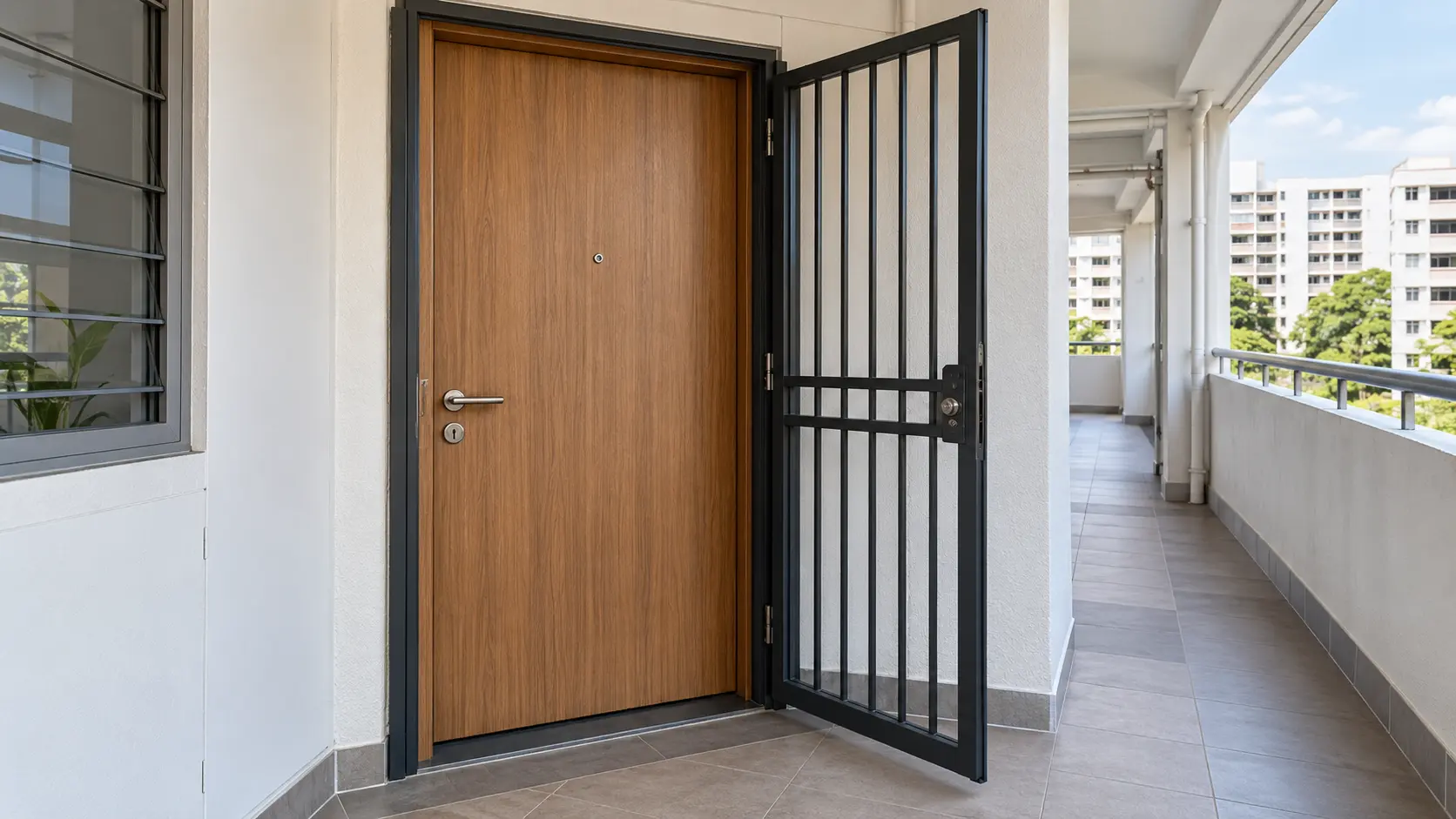
For HDB and BTO flats, the main entrance door is typically fire-rated, so repair, adjustment or replacement work should take this into account. Requirements vary by the flat's layout and its position relative to the fire escape route, so it is best to confirm current requirements with HDB or a registered contractor before starting work. See HongRui's HDB main door replacement rules for permit considerations, and the timber fire-rated door maintenance guide for a routine care schedule that can delay several of the defects above. Secondary metal gates in front of the main door are a separate, generally non-fire-rated assembly, but rust, sagging or misalignment on the gate should not be allowed to interfere with the main door's ability to close and seal correctly.
Commercial and Institutional Applications
Facility managers and building owners overseeing offices, retail units, hotels, hospitals, schools and industrial premises typically track door defects through a formal door schedule that records each door's location, fire rating and maintenance history. Gaps, rust or misalignment on a fire door are treated as items requiring prompt rectification, since building owners have an ongoing duty to keep fire protection measures in efficient working order. High-traffic back-of-house doors — service corridors, staircases, plant rooms — tend to show sagging and hardware wear earlier than lower-traffic residential doors simply due to frequency of use.
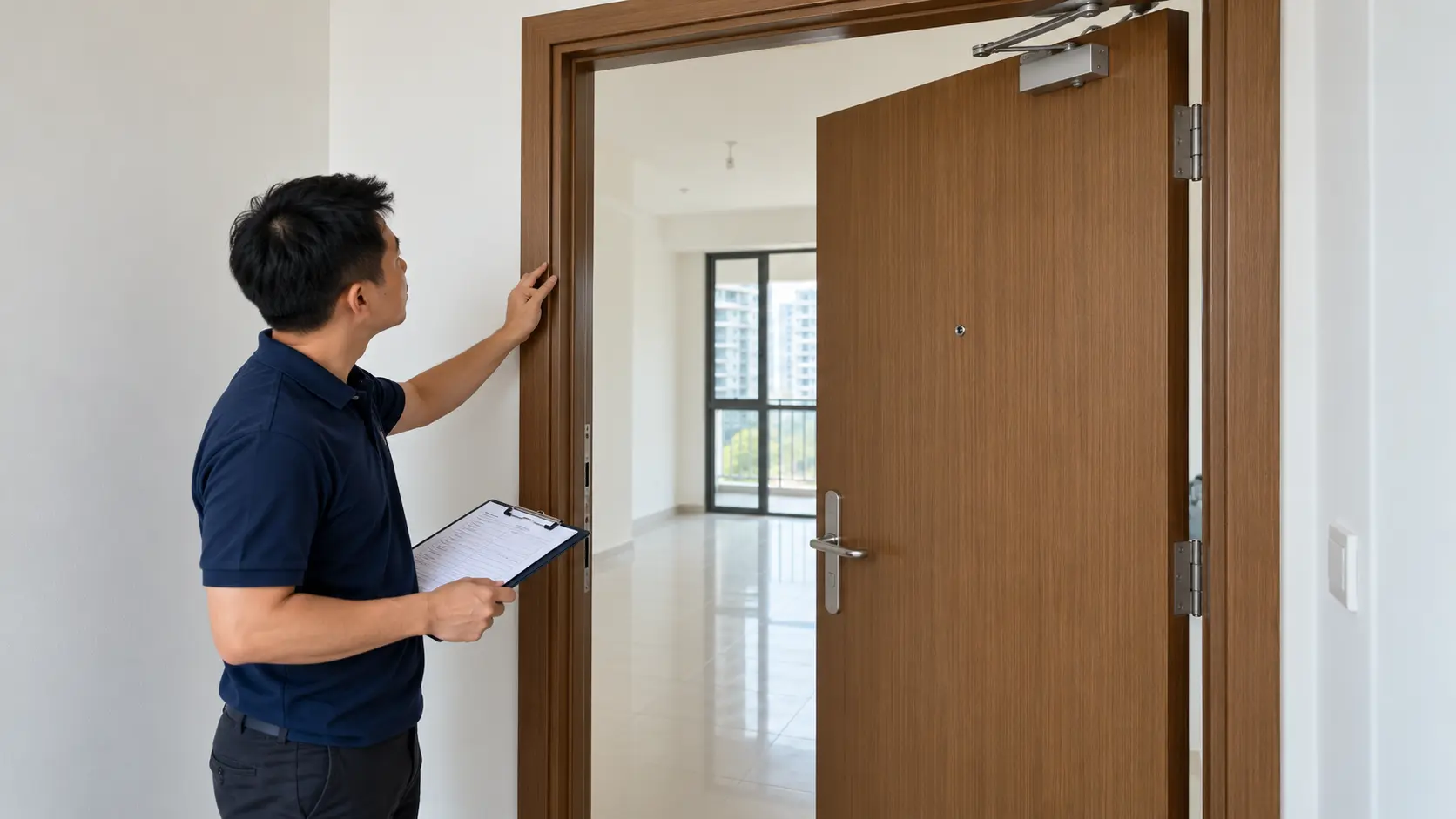
Inspection Checklist
A simple periodic check can catch most of these defects while they are still easy to correct:
- Open and close the door fully — does it swing freely without dragging or catching?
- Check for daylight gaps around the frame when the door is closed.
- Inspect hinges for looseness, rust streaks or worn screw holes.
- Run a hand along the door edge to feel for warping or an uneven seal.
- Check the strike plate and lock alignment — does the latch engage smoothly?
- Look at the base of metal gates and frames for standing water or early rust.
- For fire-rated doors, check that the intumescent seal is intact and the door closer functions correctly.
Repair, Adjust or Replace?
Most sagging and minor gap issues are correctable through hardware adjustment. Most rust on hardware is treatable if caught before it spreads to structural components. Warping and misalignment are more variable — a mild case may be reconditioned, but a leaf or frame that has moved significantly out of shape is usually more cost-effective to replace than to repeatedly repair, particularly once the fix would compromise fire performance. If a defect keeps recurring within a few months of being corrected, the underlying cause — hinge wear, frame movement or persistent moisture — likely has not been addressed, and a fuller assessment is worth arranging.
Common Mistakes to Avoid
- Trimming a fire-rated door leaf to fix a gap without confirming this does not affect its certified fire performance.
- Repeatedly re-tightening worn hinge screws into a stripped screw hole instead of fitting a longer screw or repairing the timber.
- Painting over rust without removing corrosion first, which usually accelerates rusting underneath the new coating.
- Wedging a sagging or misaligned fire door open, which is inconsistent with how fire doors are required to function.
- Assuming a defect is purely cosmetic without checking whether it affects the seal, latch or fire performance.
Questions to Ask Before Repairing or Replacing a Defective Door
- Is the door fire-rated, and does the repair affect its Certificate of Conformity?
- Is the defect isolated to hardware, or does it involve the door leaf or frame?
- Has this defect recurred before, and was the root cause ever addressed?
- For HDB and BTO flats, is a permit required for this scope of work?
Frequently Asked Questions
Why do doors warp so much faster in Singapore than in other countries?
Singapore's high humidity and heat cause timber and timber-composite doors to absorb and release moisture continuously, which is more demanding than a drier climate. Doors facing direct sun, exposed corridors or bathrooms are typically affected earliest. Less moisture-sensitive materials, such as aluminium, tend to stay more dimensionally stable in these conditions.
Is a sagging door always a sign the door needs to be replaced?
Not usually. Sagging is most often caused by worn hinges, loose screws or hardware that can no longer support the door's weight, and these can typically be corrected without replacing the leaf. Replacement becomes more likely only if sagging has caused lasting damage or keeps recurring after repair.
Can I trim my HDB main door myself to fix a gap?
This is not advisable if the door is fire-rated, which applies to most HDB main entrance doors. Trimming or altering a certified fire door can affect its tested fire performance and may not comply with HDB or SCDF requirements. Any adjustment should be assessed by a registered contractor or the door's supplier, with current requirements confirmed with HDB first.
How can I tell if rust on my gate or door hardware is serious?
Surface rust that can be lightly scraped off is usually treatable with cleaning and re-coating. Rust that has created pitting, flaking or a hollow-sounding section of metal indicates deeper corrosion that may have weakened the component structurally, which generally means the part should be replaced rather than resurfaced.
Does a misaligned door always mean the frame has shifted?
Not always. Misalignment is frequently caused by a combination of worn hinges and gradual sagging rather than the frame itself moving, though genuine frame movement from building settlement is possible in older properties. A contractor can usually determine the cause by checking whether the frame is out of square.
How often should door hardware be checked in a Singapore home?
A visual and functional check every six months is a reasonable starting point for most residential doors, with more frequent checks in high-humidity locations such as bathrooms or exposed corridors. Fire-rated main doors also benefit from an annual check of the seal, closer and certification label.
Project teams can review HongRui's related door and gate guides to compare available materials, applications and installation considerations for repair or replacement projects across HDB, BTO, commercial and institutional buildings.


Leave A Comment